
Posted on April 8, 2026
Choosing an orthodontic service in Herndon means understanding your real options before you book a consultation. The treatment you pick shapes your comfort during the months ahead, your appearance while in treatment, and your final smile. From traditional metal braces to invisible clear aligners, today’s patients have more orthodontic choices than ever.
This guide is written for residents researching their options. If you’d rather skip ahead, Smilebliss Orthodontics in Herndon is led by Dr. Hussaini, a Diplomate of the American Board of Orthodontics with over 25 years in the Northern Virginia community.
Book a free consultation, and a board-certified orthodontist will walk you through which option fits your case.
Most orthodontic offices offer four core services: traditional metal braces, clear aligners, retainers for post-treatment retention, and teeth whitening as a finishing step. Each addresses a different need, and many patients use more than one over the course of treatment.
Braces and aligners are the active phase that moves teeth into position. Retainers hold those results in place after treatment ends. Whitening is a cosmetic option that comes last. Knowing what each service does helps you ask better questions during a consultation.
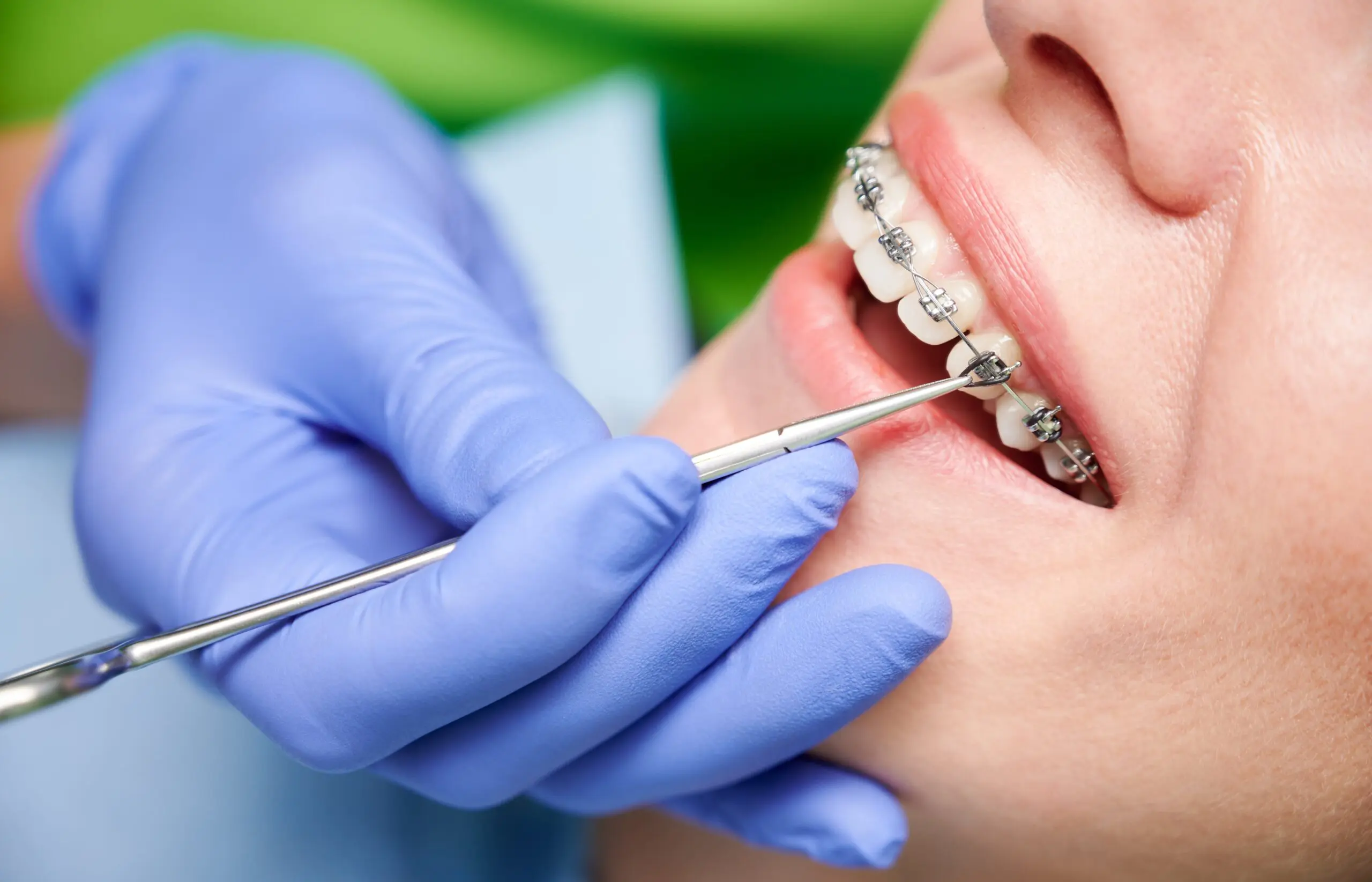
Traditional braces use brackets bonded to each tooth, connected by a thin archwire and held in place with rubber bands or elastic ties. The wire applies steady pressure that gradually shifts teeth into position over many months, correcting issues like overcrowding, gaps, and misalignment.
A standard set of metal braces has three working parts:
Modern brackets are smaller and lower-profile than older versions, making them more comfortable than past decades. Treatment usually involves adjustment visits every 4 to 6 weeks. Metal braces remain the most predictable option for complex tooth movements, and many kids and teens enjoy adding colored elastics at each visit.
 Clear aligners are a strong fit for teens and adults who want a discreet, removable alternative to braces. They consist of a series of custom transparent trays that gradually shift teeth into position. You wear each tray for a set number of weeks before progressing to the next.
The advantages are appearance and convenience: aligners are nearly invisible, and you take them out to eat, brush, and floss. The trade-off is compliance. Manufacturers such as Align Technology recommend 20 to 22 hours of daily wear, so the treatment works best for disciplined patients. Aligners suit mild-to-moderate cases; complex bite corrections may still call for braces.
Retainers are the unsung heroes of orthodontic care. Without consistent retainer wear after braces or aligners come off, teeth gradually drift back toward their original positions, undoing the months of work that produced your new smile.
There are two main types: removable retainers, similar to clear aligners, and fixed retainers bonded behind the front teeth. Most orthodontists prescribe full-time wear at first and then transition to nights-only. Because retainers are easy to lose, many practices offer multi-year retainer protection plans so patients have replacements without paying full price each time.
Teeth whitening is best done after orthodontic treatment is complete. During active braces or aligner therapy, the brackets or trays cover parts of the enamel, which means whitening before treatment ends can leave uneven coloring once the appliances come off.
Three timing principles guide most patients on when to whiten:
Most orthodontic offices offer professional whitening as an add-on for finishing patients.
When evaluating orthodontic services in Herndon, compare total treatment fees rather than just monthly payments. Ask whether the quote includes consultations, X-rays, adjustments, and retainers, since hidden add-ons can drive up the real cost. Most insurance plans with orthodontic benefits cover a portion of treatment.
A free initial consultation is the easiest way to get an accurate cost picture. Smilebliss in Herndon advertises braces at $2,998 and clear aligners at $3,998, with monthly payment options and most insurance plans accepted; published rates apply to a 24-month plan.
Picking an orthodontic service is about matching the treatment to your goals, your timeline, and your budget. Whether you want stainless steel braces, an invisible aligner path, or long-term retainer protection, getting an expert evaluation is the smartest first step.
Smilebliss Orthodontics in Herndon is led by Dr. Hussaini, a board-certified orthodontist trained in biomedical engineering at Virginia Commonwealth University and orthodontics at Columbia University, with over 25 years in the Northern Virginia community.
Book your free consultation or call (571) 498-8383 to start your treatment plan.
The American Association of Orthodontists recommends a first orthodontic evaluation by age 7. By that age, a child usually has enough permanent teeth in place for an orthodontist to spot developing issues early, even if active treatment is years away.
Many dental plans include partial orthodontic benefits, especially for patients under 18. Coverage limits vary by carrier and plan, so it’s worth asking the orthodontic office to verify benefits before treatment starts.
Most adult and adolescent treatments fall in the range of 12 to 36 months, depending on the complexity of the case. Mild crowding may resolve in about a year, moderate cases average 18 to 24 months, and complex bite corrections can take longer. Your orthodontist provides a personalized timeline after taking X-rays and digital pictures.
For mild to moderate alignment issues, clear aligners can deliver results comparable to braces. For severe rotations, large gaps, or significant bite problems, fixed braces are typically more predictable.
