
Posted on May 15, 2026
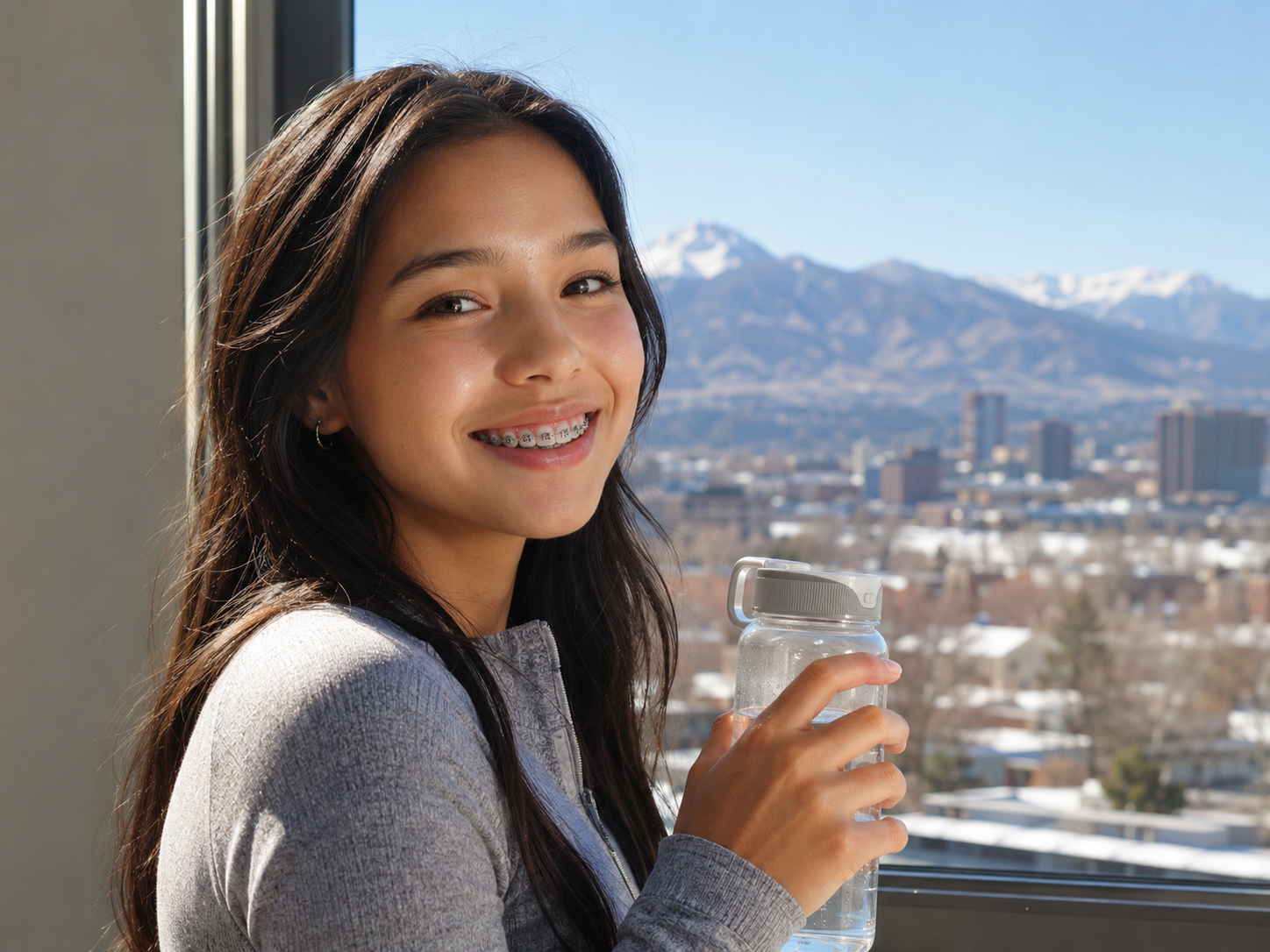
Denver’s semi-arid climate keeps average humidity near 52 percent, and the dry air can leave braces wearers with a drier mouth, which raises the risk of plaque buildup and bad breath if hydration and hygiene habits don’t adjust. Drinking more water, using a fluoride rinse, and brushing carefully around wires and brackets counteracts the effect. None of this changes your treatment timeline, only your daily care routine.
Denver sits over a mile above sea level in a semi-arid climate, and that combination changes the daily experience of wearing braces more than most patients expect. At Smilebliss Orthodontics, we walk new patients through exactly what to adjust.
The dry air itself is not a treatment risk, but it does shift how your mouth behaves day to day, from saliva levels to how quickly your lips and cheeks feel irritated around new brackets. A few small habit changes offset nearly all of it.
None of this requires anything beyond a slightly adjusted routine at home. Contact us today to schedule a free consultation and get personalized care tips for your treatment.
Denver’s semi-arid climate keeps relative humidity around 52 percent on average, with some summer months dipping into the low 40s. That dry air pulls moisture from everything it touches, including the inside of your mouth.
For most people, this goes unnoticed, but brace wearers rely on a healthy layer of saliva to rinse away food particles around brackets and wires. Less moisture in the air means your mouth has to work a little harder to stay balanced.
Elevation adds another layer to this equation. At roughly 5,280 feet, Denver’s thinner air holds even less moisture than lowland cities report at similar humidity readings, and the body loses water faster through breathing and skin at altitude. Patients who spend time outdoors hiking, biking, or skiing in the Front Range often notice their mouths feel drier on active days, on top of the baseline dryness from the climate itself.
Building extra water breaks into an outdoor day protects both general hydration and the saliva levels your teeth and gums depend on.
Saliva naturally washes away bacteria and food debris throughout the day, and dry climates can reduce how much moisture stays in your mouth between meals. Braces already create more surfaces for particles to cling to, so this effect compounds.
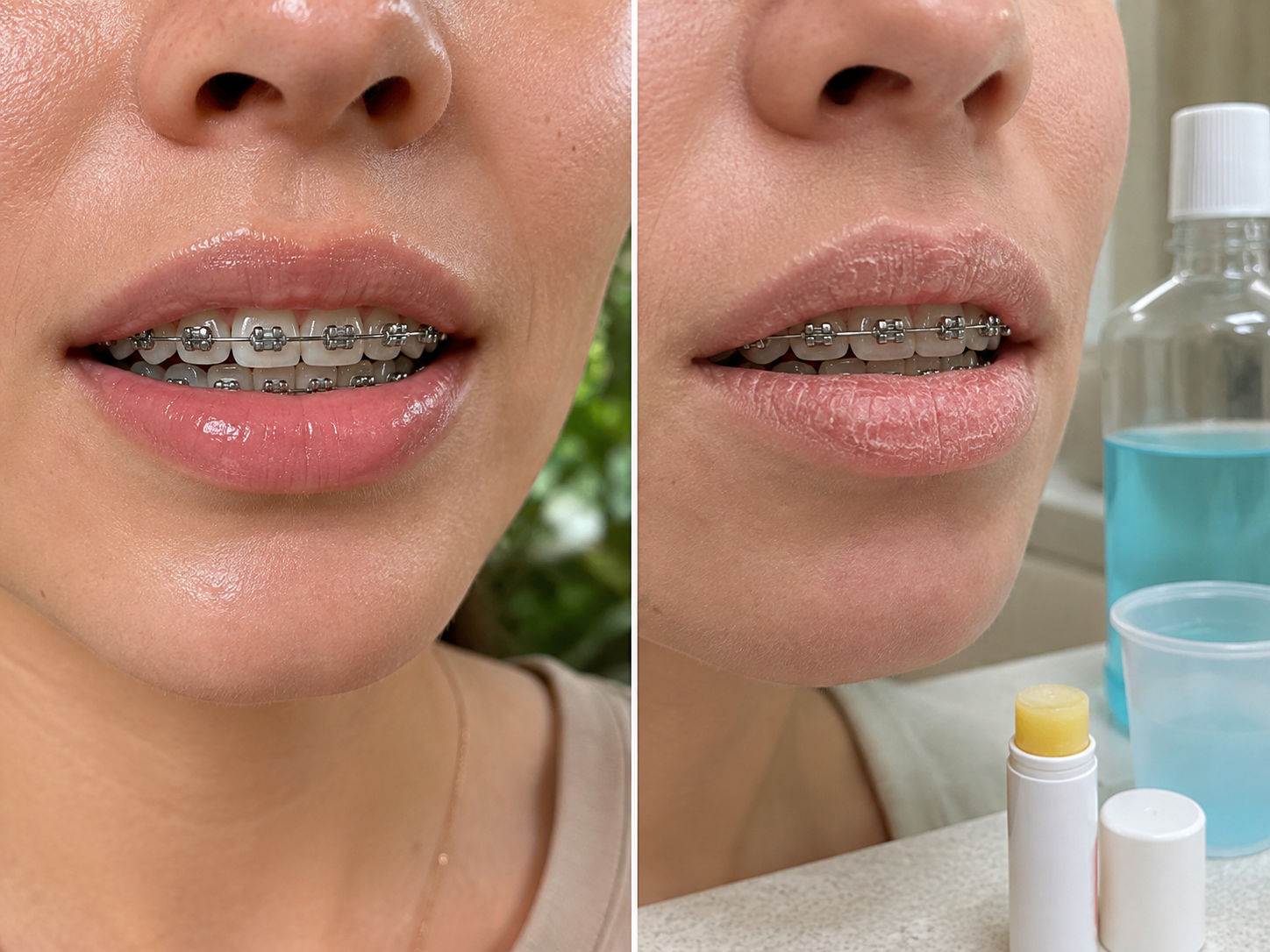 With less natural rinsing action, plaque can build up faster around brackets and along the gumline. Left unchecked, this raises the risk of staining, gum irritation, or decay by the time brackets come off.
Dry air combined with new brackets rubbing against soft tissue can leave lips and cheeks more irritated than they would be in a humid climate. Most patients notice this most in the first few weeks after placement.
Denver’s elevation compounds the dryness that comes from low humidity alone, since thinner air causes the body to lose water more quickly through normal breathing. Patients wearing braces who are also adjusting to a higher altitude, whether they moved to Denver recently or are visiting from a lower elevation, sometimes notice drier mouths sooner than climate alone would explain. Staying ahead of hydration during this adjustment period helps keep both general health and oral care on track, especially during the first few weeks of treatment or after altitude changes.
The good news is that none of these effects require anything beyond a few adjusted habits. A bedroom humidifier is one of the most overlooked fixes, since Denver’s indoor heating systems dry out the air even further during colder months, and running one overnight gives your mouth several extra hours of relief from the driest conditions. The table below breaks down what to watch for during the day and what actually helps.
UV exposure is an often-overlooked piece of the pattern. Denver’s elevation means noticeably stronger UV intensity than sea-level cities, and that added sun exposure can damage and dry out lip tissue on its own, compounding the chapping already caused by low humidity.
A lip balm with SPF protection addresses both issues at once, which matters most for patients who spend time outdoors during ski season or summer hikes. Pairing sun protection with the hydration habits above rounds out a routine that accounts for everything Denver’s elevation adds to standard dry-climate care.
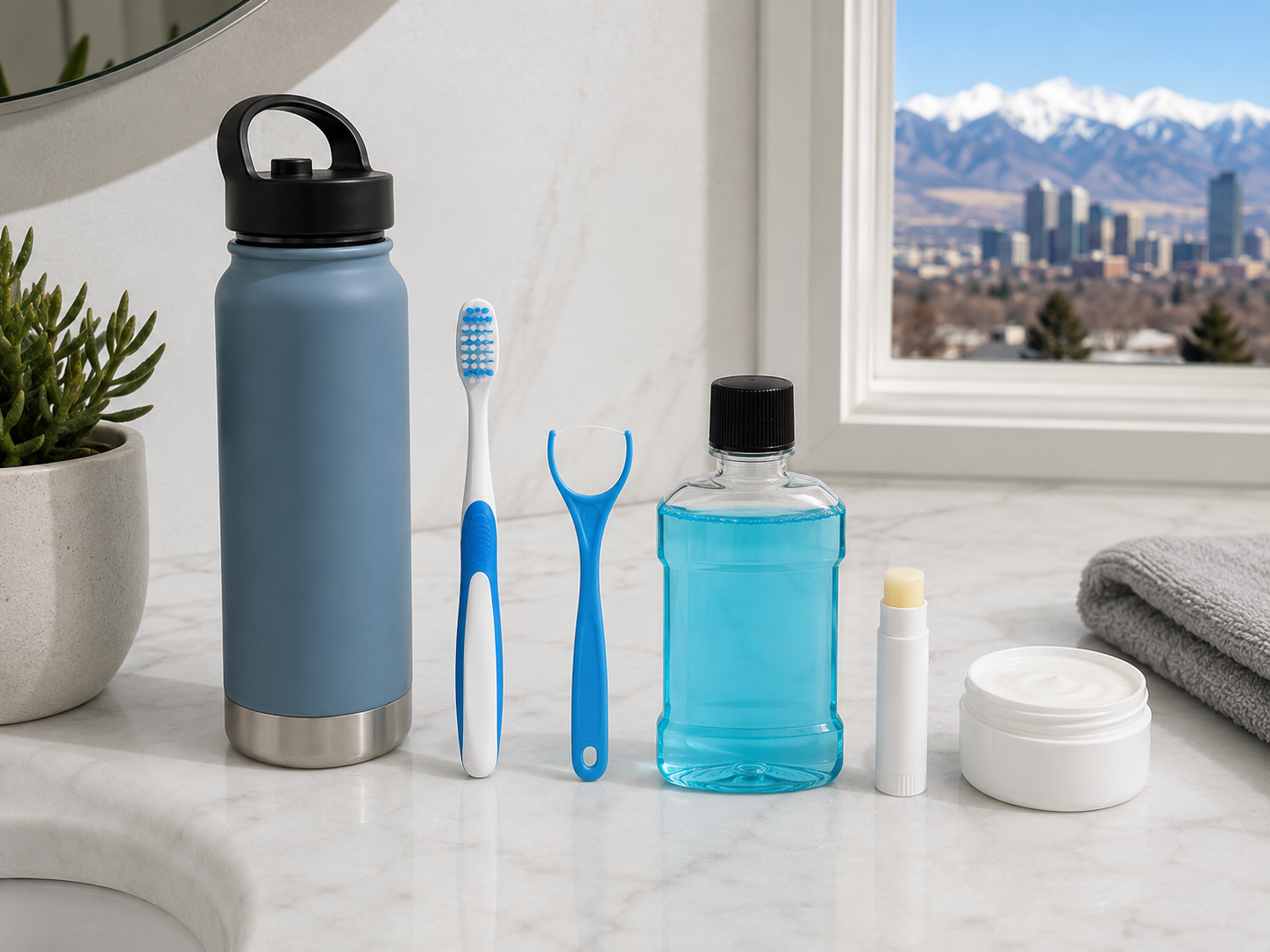 Small changes make the biggest difference here. Carry water with you throughout the day, especially if you spend time outdoors at Denver’s elevation, and rinse your mouth after meals when a full brushing isn’t possible.
A soft-bristle brush, an orthodontic-friendly floss threader, and a fluoride rinse round out a routine built for both braces and Denver’s climate. We walk every new patient through this exact setup at their first appointment.
Seasonal changes matter too. Denver’s driest stretches typically run from late fall through winter, when outdoor humidity and indoor heating work against your mouth at the same time. Patients researching Denver braces treatment options often ask about this seasonal shift at their first visit, and it’s worth flagging any noticeable dryness change to your provider rather than assuming it will pass on its own.
Our Denver team walks every patient through what climate-aware care should include at the first visit.
Denver’s climate is not a reason to worry about your treatment, only a reason to adjust a few daily habits. A quick conversation at your next visit covers everything you need.
At Smilebliss in Denver, Dr. Alejandro Arango and our team walk every patient through climate-specific care as part of your traditional braces plan. Call us today at (720) 706-8482 to schedule a free consultation at 1050 South Wadsworth Blvd., Suite H, Lakewood, CO 80226.
Not harder in terms of treatment progress, but it can increase dry mouth and plaque risk if hydration and hygiene habits don’t adjust. Most patients offset this easily with more water, consistent brushing, and a fluoride rinse after meals, and your treatment timeline stays exactly on schedule.
Braces create more surfaces for saliva to work around, and in a dry climate like Denver’s, that effect is more noticeable than it would be elsewhere. Increasing water intake throughout the day, especially during outdoor activity at altitude, helps restore natural moisture balance around brackets and wires.
Altitude itself does not affect how braces move teeth or change your treatment timeline. The dry, low-humidity air that comes with Denver’s elevation mainly affects daily comfort and hygiene, causing a drier mouth that a few adjusted habits can offset without any impact on results.
There’s no fixed number, but sipping water consistently throughout the day, rather than only at meals, helps counter the drying effect of Denver’s semi-arid climate on your mouth. Carrying a refillable bottle and taking small sips between meals works better than a few large servings.
Yes, reduced saliva means less natural rinsing around brackets, which can raise plaque and cavity risk over time if left unaddressed. Staying hydrated, rinsing with fluoride mouthwash after meals, and brushing carefully around wires significantly lowers that risk throughout your treatment.
A fluoride mouthwash, orthodontic wax for irritation, and a moisturizing lip balm cover most of what patients need to manage dry mouth in Denver’s climate. We recommend specific products based on your case, your brackets, and your daily routine at your first appointment.
Yes, a moisturizing lip balm reduces the chapping that dry air and bracket friction can cause together, especially in the first few weeks after placement. Applying it a few times a day, along with orthodontic wax on irritated spots, makes a noticeable difference for most patients.
Brushing and flossing around brackets after every meal becomes even more important in a dry climate, since there’s less natural saliva to rinse away food particles between brushings. A soft-bristle brush and a fluoride rinse round out a routine built specifically for Denver’s altitude and dryness.
