
Posted on April 20, 2026
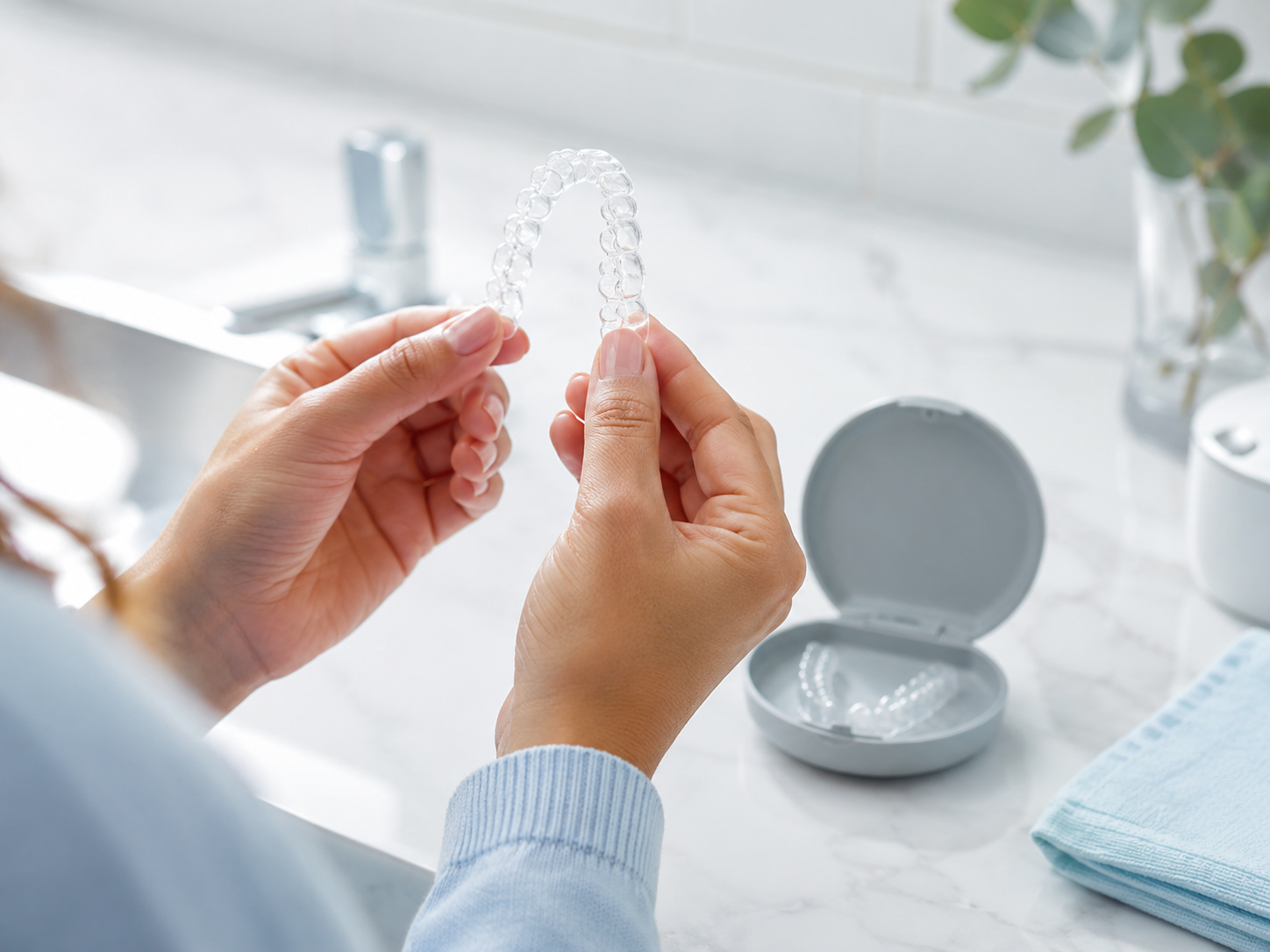
Clear aligners in Denver use a series of custom, removable clear trays to gradually shift teeth into place, typically worn 20 to 22 hours a day and switched out every one to two weeks. Treatment works best for mild to moderate crowding and spacing, with simpler cases finishing in months rather than years. A free consultation determines whether clear aligners fit a specific bite.
Metal brackets aren’t the only way to straighten teeth anymore, and for the right case, clear aligners get the job done just as reliably. We field more questions about clear aligners than almost any other treatment option.
At Smilebliss Orthodontics, clear aligners use a series of custom-fitted trays instead of brackets and wires, moving teeth gradually with each new set. This guide breaks down how the treatment actually works and who tends to get the best results from it.
The only way to know if clear aligners fit your specific bite is a hands-on exam, not a general description. Contact us today to schedule a free consultation and find out.
Clear aligners are built from a digital scan of your teeth, not a single generic tray. Each patient gets a custom sequence of trays designed to move specific teeth in a specific order, planned out from the very first scan.
The trays themselves are nearly invisible and fully removable, which is the main reason so many adults and teens choose this option over traditional metal brackets for cases that qualify.
Confirming candidacy still starts with a hands-on exam rather than a photo or online quiz, since bite depth and tooth root position don’t show up in a smile photo. A visit with an orthodontist in Denver covers both the scan and a full bite check, so the treatment plan reflects the actual mouth being treated rather than a general estimate. That exam also flags anything better suited to traditional brackets before a patient commits to a specific system.
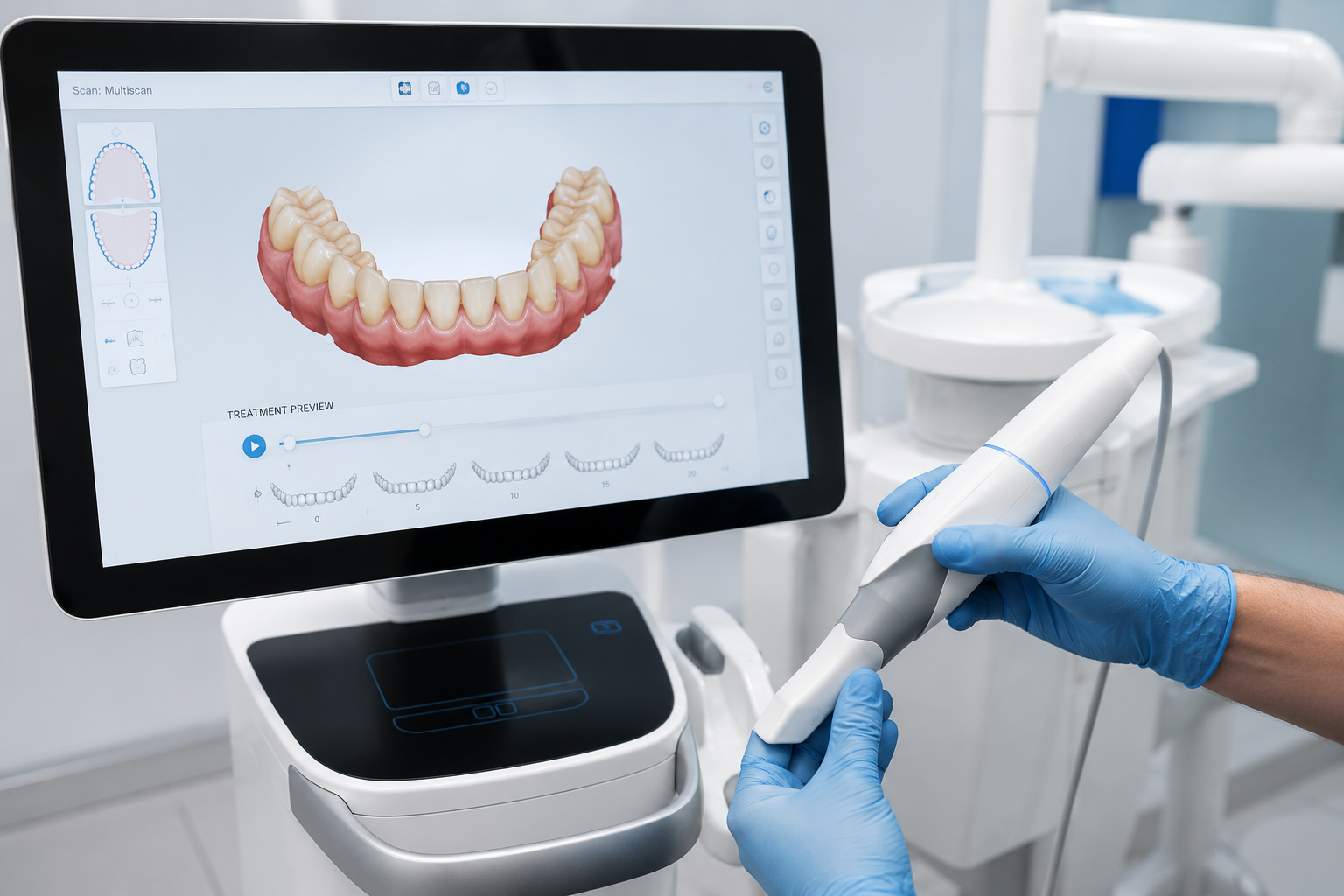 Every clear aligner tray is manufactured from a 3D scan of your teeth, not a one-size-fits-all mold. That scan also produces a preview of how your smile is expected to shift over the full course of treatment.
This digital scan replaces the old-style putty impression entirely, which means no messy trays and a sharper, more accurate model for the lab to work from.
The preview generated from that scan gives patients a rough look at the expected final result before a single tray is made. It also lets the treating provider adjust the movement plan before manufacturing begins, catching issues on screen rather than mid-treatment.
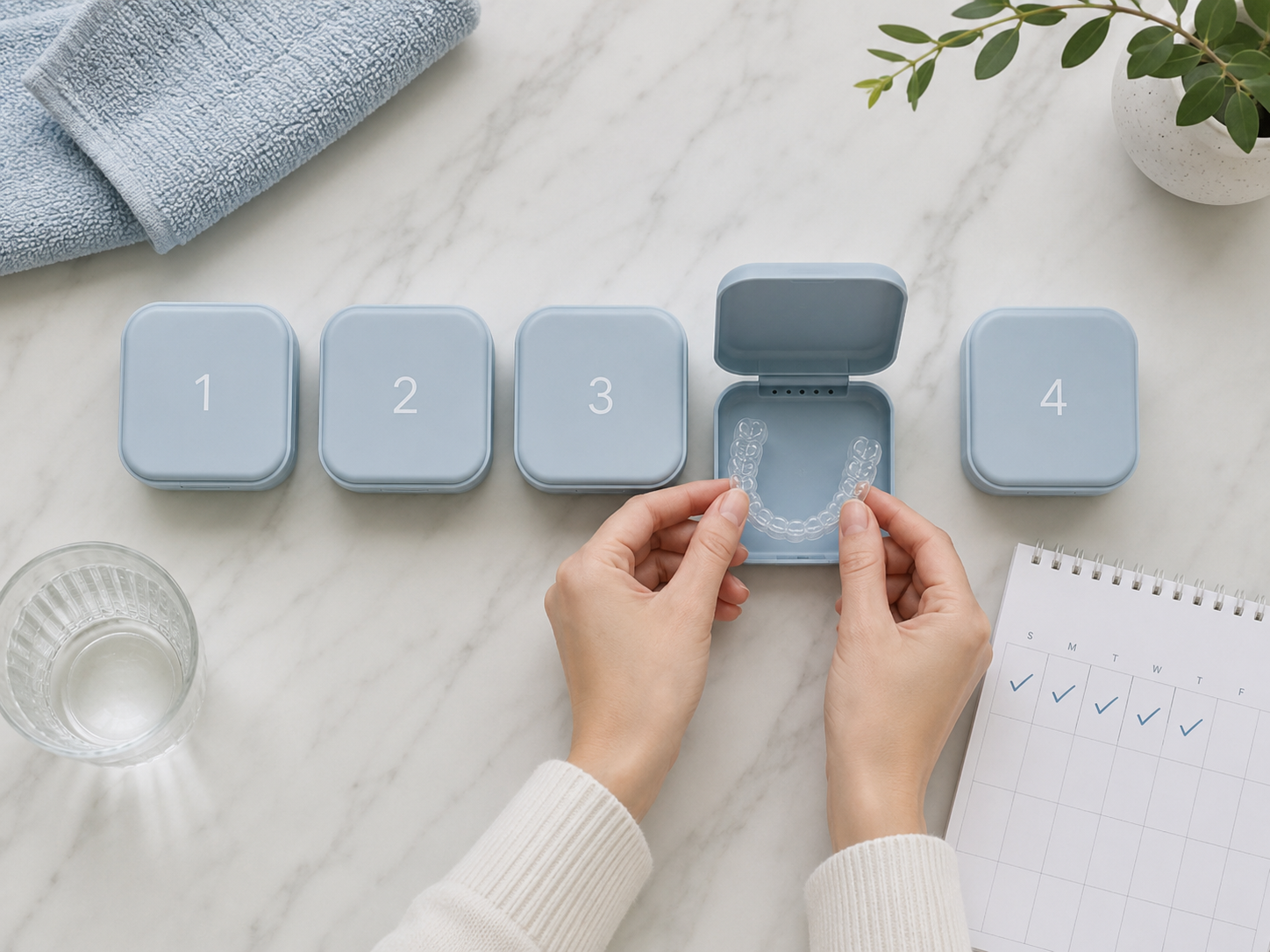
Each tray in the series applies slightly more pressure than the last, nudging teeth a small amount before you switch to the next one. Most patients move through a new tray every one to two weeks.
Some cases call for small attachments, tooth-colored bumps bonded to specific teeth, which give the trays extra grip for more complex movements like rotations. Patients switch trays on schedule at home, without needing an appointment for every change. Checkups are still spaced several weeks apart so the treating team can confirm the trays are tracking as planned and catch any fit issues early.
The pressure from each tray is steady but mild. That’s why most patients describe clear aligners as noticeably more comfortable day to day than traditional brackets, especially during the first few days after a new tray goes in.
There’s no wire to tighten and no bracket edge to irritate the inside of the cheek, which is the comfort trade-off most patients notice first. Mild soreness after switching trays usually fades within a day or two as the mouth adjusts to the new pressure. Over-the-counter pain relievers and orthodontic wax cover the rare rough spot, though most patients don’t need either past the first week of a new set.
 Clear aligners work best for mild to moderate crowding, spacing, and some bite issues, where the movement needed is gradual rather than dramatic. More complex bite corrections, severe crowding, or cases needing precise rotational movement often respond better to traditional metal braces.
A quick exam is the only reliable way to know which category a specific case falls into, since two patients with similar-looking teeth can need very different approaches once the bite is examined closely.
Certain signs point toward traditional braces from the start, including a significant overbite or underbite, teeth that need real rotation rather than gentle sliding, or a case involving missing teeth that still need space managed carefully. None of that rules out orthodontic treatment altogether; it just means a bracket-based system usually gets a more predictable result for that specific bite. A consultation is what actually separates these cases, since two smiles that look similar from across a room can need very different plans once the bite is examined up close.
Clear aligner treatment through us starts at $3,998, with the same zero-interest in-house financing, HSA, FSA, and dental insurance options available for traditional braces. The exact price depends on how many trays a specific case requires.
Most patients spread that cost over the length of treatment rather than paying it all upfront, which keeps the monthly amount closer to what a typical bill already looks like.
Comparing cost against a full course of traditional braces is worth doing before deciding, since aligner and bracket pricing can land close together once financing is factored in for a similar treatment length. The bigger cost driver tends to be case complexity rather than which system is chosen, since more trays or more adjustment visits both add to the total regardless of the option selected.
A consultation is still the only way to get a number specific to one bite rather than a general range.
Clear aligners work well for plenty of cases, but it isn’t the right fit for every bite, and the only way to know is a real exam. A free consultation gives you a clear, personal answer.
At Smilebliss in Denver, Dr. Alejandro Arango and our team walk every patient through whether clear aligners or traditional braces make more sense for their case. Call us today at (720) 706-8482 to schedule a free consultation at 1050 South Wadsworth Blvd., Suite H, Lakewood, CO 80226.
Clear aligners use a series of custom, clear trays made from a 3D scan of your teeth. Each tray applies gentle, continuous pressure to shift teeth slightly before you switch to the next set in the sequence, typically every one to two weeks. Periodic checkups confirm the trays are tracking as planned throughout treatment.
Clear aligner treatment through our practice starts at $3,998, with zero-interest in-house financing, HSA, FSA, and most dental insurance accepted toward the total. Your exact cost depends on how many trays your specific case requires and how many checkup visits the plan includes. A consultation gives you a firm number rather than a general estimate.
Treatment length depends on case complexity, though mild to moderate cases often finish faster than a comparable course of traditional braces. Simple spacing or crowding cases can wrap up in well under a year, while more involved cases take longer. A consultation gives you a realistic timeline based on your own bite rather than a general average.
For mild to moderate crowding and spacing, clear aligners are typically just as effective as traditional braces. More complex bite corrections, including significant rotations or major overbite and underbite issues, often respond better to traditional metal braces, which apply more continuous, precise force to each tooth. A consultation determines which approach fits a specific bite.
Most treatment plans call for 20 to 22 hours of wear per day, removing the trays only for eating, drinking anything besides water, and brushing. Consistent wear keeps treatment on schedule, since each tray is designed around a specific amount of daily pressure. Less wear time extends the overall timeline.
Yes, teenagers are common candidates for clear aligners, particularly for mild to moderate crowding and spacing cases. Compliance indicators built into some tray systems help track actual wear time, giving parents and the treating team a clearer picture than guesswork alone. A consultation determines whether a teen’s specific bite and discipline level make aligners a good fit.
Most patients feel mild pressure for a day or two after switching to a new tray, similar to the soreness felt after a traditional braces adjustment. The discomfort is usually mild enough to manage without prescription medication, and over-the-counter pain relievers cover the rest. It typically fades quickly as the mouth adjusts to each new tray in the sequence.
Call our office right away so we can get you a replacement or move you to the next tray if it still fits well. Going without a tray for more than a day or two lets teeth start to shift back, undoing recent progress. Waiting too long to report a lost tray can slow your treatment timeline.
