
Posted on May 17, 2026
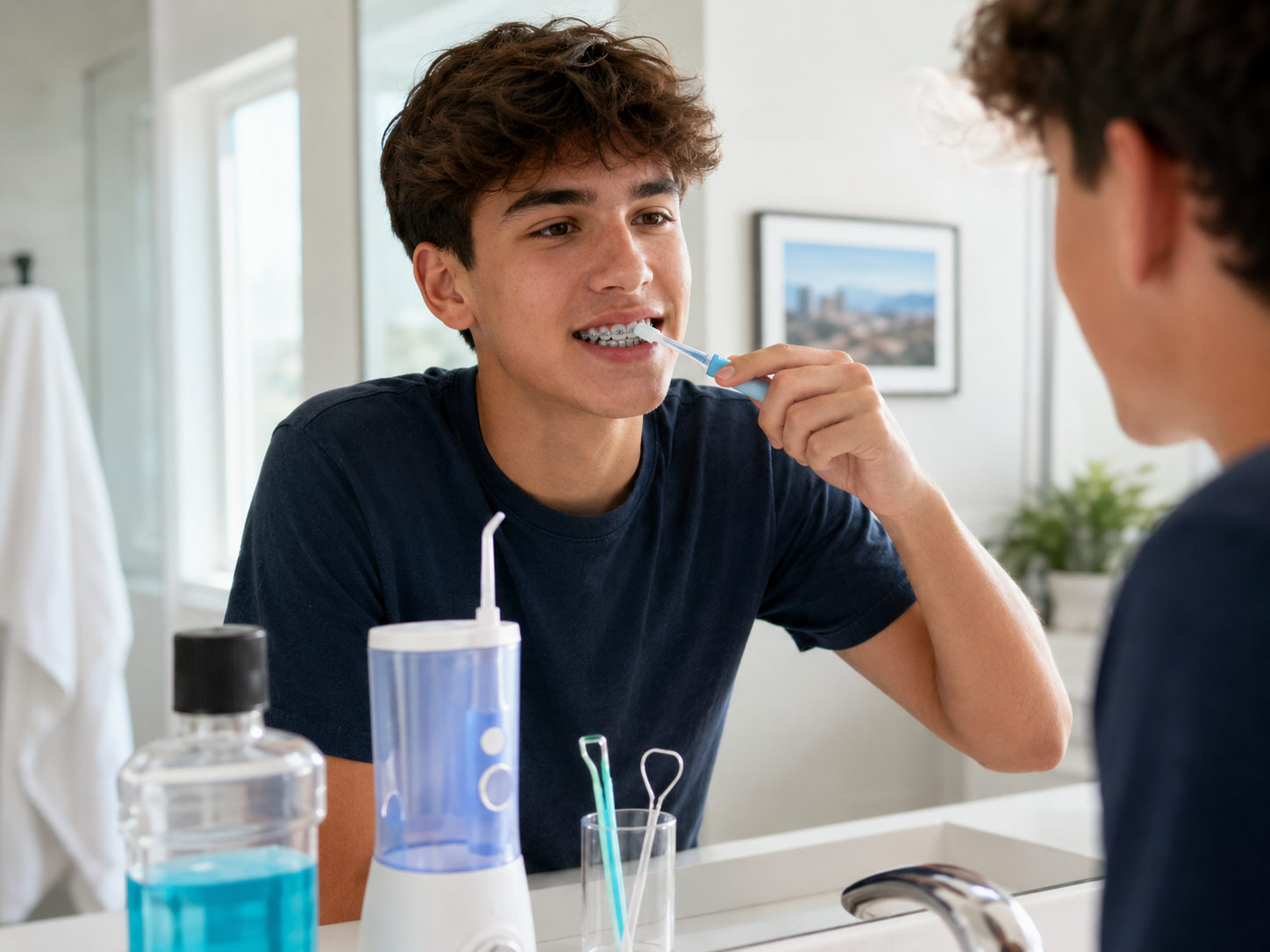
Caring for braces in Denver comes down to a consistent daily routine: brushing around every bracket after meals, flossing with a threader, avoiding hard and sticky foods, and wearing any prescribed elastics or retainers as directed. Skipping these basics is the most common reason treatment runs longer than planned. A few extra minutes a day protect both your smile and your timeline.
There’s a clear pattern: patients with a consistent daily routine finish treatment on schedule far more often than those who skip steps here and there. Small daily habits make a bigger difference than most patients expect.
At Smilebliss Orthodontics, none of the habits that actually matter are complicated, but they do need to happen every day, not just before an appointment. This guide covers the daily routine that keeps treatment on track.
If anything about your routine feels unclear, we would rather answer the question than have you guess. Contact us today with any care questions during treatment.
Brackets and wires create more surfaces for plaque and food particles to cling to than natural teeth alone. That means a rushed brushing routine leaves more behind than it used to before braces went on.
Left unaddressed, that buildup can lead to staining, gum irritation, or even decay by the time brackets come off. None of that reflects on the braces themselves, just on the daily habits around them.
Plaque that sits around a bracket for even a few days can start to pull minerals out of the enamel underneath, leaving a lighter, permanent mark once the bracket comes off. Dentists call this a white spot lesion, and it is one of the most common cosmetic complaints patients raise after braces removal. Working with an experienced Denver orthodontist during regular adjustment visits helps catch early buildup before it reaches that point, but the daily routine at home is still what prevents it in the first place.
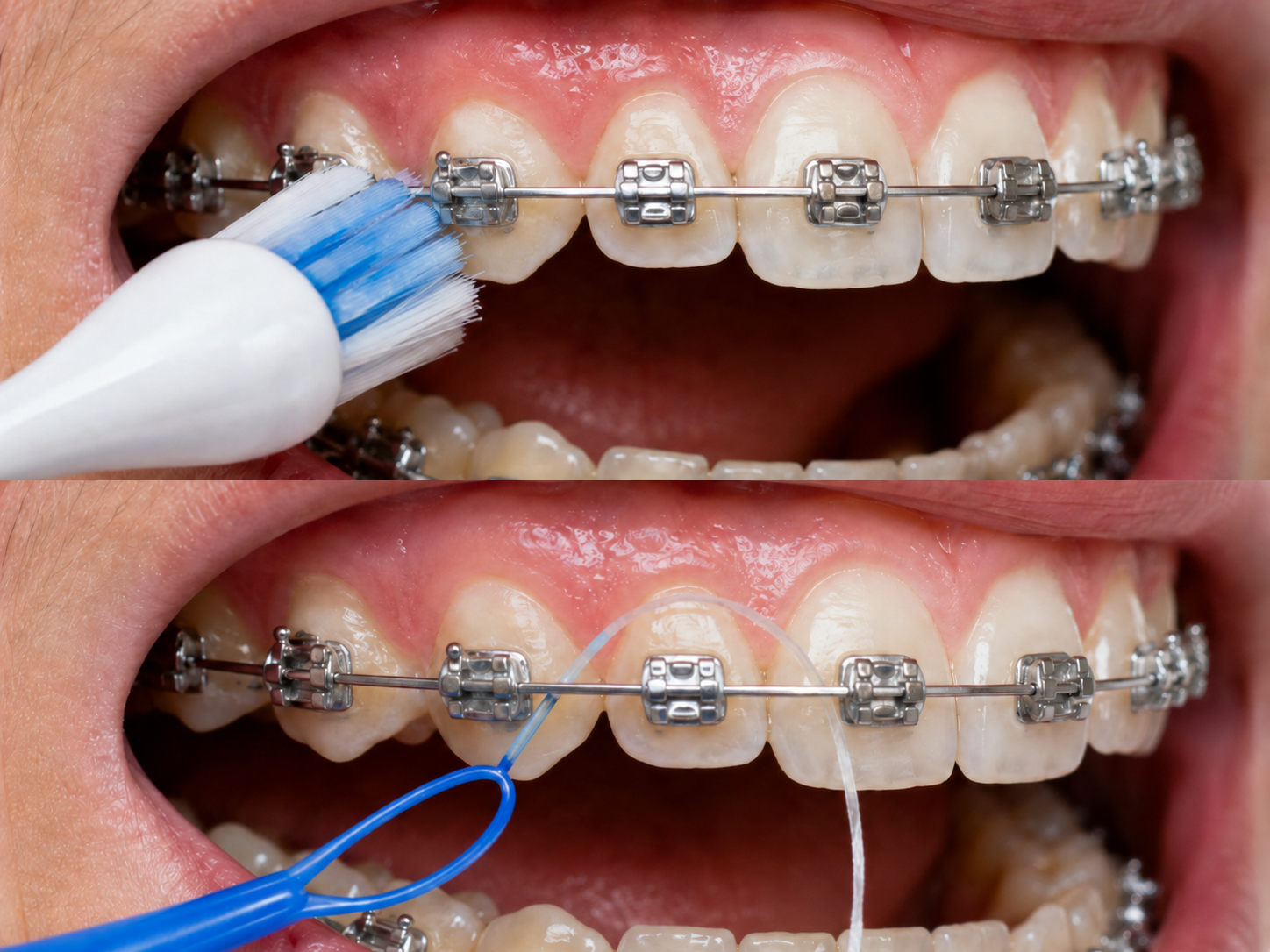 Angle your brush toward the gumline and again toward the biting edge of each tooth, spending extra time around every bracket rather than brushing straight across like you would without braces.
Regular floss can’t get under the wire on its own, so a floss threader or a water flosser reaches the spaces standard floss misses. Either tool takes a little practice but becomes quick once it’s a habit.
A daily fluoride rinse adds a layer of protection standard brushing and flossing can miss, especially around brackets where a toothbrush bristle can’t always reach completely.
None of these three steps takes more than a few extra minutes once it becomes routine, and together they cover the gaps a rushed brushing session leaves behind. Patients who stack all three into a single daily habit, rather than treating flossing or rinsing as optional, tend to reach each adjustment appointment with cleaner brackets and fewer surprises.
The table below covers the braces care mistakes we see most often in Denver patients and what to do instead.
Most of these mistakes share a common thread: they feel minor in the moment, so they get put off until the next appointment. A skipped floss session or one meal with something off the safe-food list rarely causes a problem on its own, but the pattern is what adds up over months of treatment. Patients who treat every item on this list as non-negotiable, rather than optional on busy days, are consistently the ones who finish closest to their original estimated timeline.
Routine adjustment visits are where an orthodontist actually keeps treatment moving toward the planned finish date, so skipping or repeatedly rescheduling appointments adds real time to your overall timeline.
A repair visit for a loose bracket or a poking wire usually takes less time than patients expect, and catching it early is far simpler than letting it slide until the next scheduled adjustment.
Most adjustment schedules run every four to eight weeks depending on the stage of treatment, and each visit is planned around the specific movement your teeth need next. Pushing a visit back by even a few weeks can throw off that sequence, since the wires and elastics prescribed at one appointment are often calibrated for what comes at the next one. Patients working through braces treatment in Denver get the most predictable results by keeping every adjustment on the original calendar rather than batching them together later.
None of the habits that keep treatment moving are complicated; they just need to happen consistently every single day. A few extra minutes protects both your progress and your final result.
At Smilebliss in Denver, our team walks every patient through this exact routine at the start of traditional braces treatment. Call us today at (720) 706-8482 with any care questions at 1050 South Wadsworth Blvd., Suite H, Lakewood, CO 80226.
Angle your brush toward the gumline and again toward the biting edge of each tooth, spending extra time around every bracket rather than brushing straight across the way you would without braces. A full routine typically takes a bit longer than brushing without braces, since each bracket needs its own pass. Most patients get through it in two to three minutes once the habit sets in.
Standard floss can’t easily get under the wire connecting your brackets, which is what makes flossing feel harder once braces go on. A floss threader or water flosser reaches those spaces and becomes quick once it becomes a habit. Skipping this step, even for a few days, lets food particles build up in places a toothbrush alone cannot reach.
Skipping prescribed elastics slows down the specific bite correction they’re designed to achieve, which can add real time to your overall treatment schedule if it happens repeatedly. Elastics work best when they are in place for close to the full number of hours prescribed each day. Wearing them inconsistently, even a few hours less than instructed, can undo progress made at the last adjustment.
Call our office for a repair visit right away rather than waiting for your next scheduled adjustment. Catching a loose bracket early keeps your treatment on its planned timeline, since a bracket that stays loose can shift out of position or let the wire move in ways that were not intended for this stage of treatment.
Yes, skipped brushing routines, ignored repairs, and forgotten elastics are common reasons treatment extends beyond its original estimate. Consistent daily habits keep a plan on schedule, while gaps in care tend to compound over several weeks rather than showing up immediately, which is why they are easy to underestimate until an adjustment visit reveals the delay.
A daily fluoride rinse adds protection standard brushing and flossing can miss, especially around brackets where a toothbrush bristle doesn’t always reach completely. Using it once a day, after brushing and flossing rather than in place of them, gives the fluoride time to strengthen enamel in the spots most exposed to plaque buildup around each bracket.
Both work well; a water flosser is often faster and easier for some patients, while a floss threader is more portable and needs no batteries or counter space. Either is a significant improvement over skipping flossing entirely, so the better choice usually comes down to which one a patient will actually use every single day without skipping it.
Rescheduling as soon as possible keeps your treatment plan on track. Repeated missed or delayed appointments are one of the most common reasons treatment runs past its original timeline, since each visit is planned around the movement your teeth need next, and pushing that sequence back can add weeks or months to the overall plan.
