
Posted on April 22, 2026
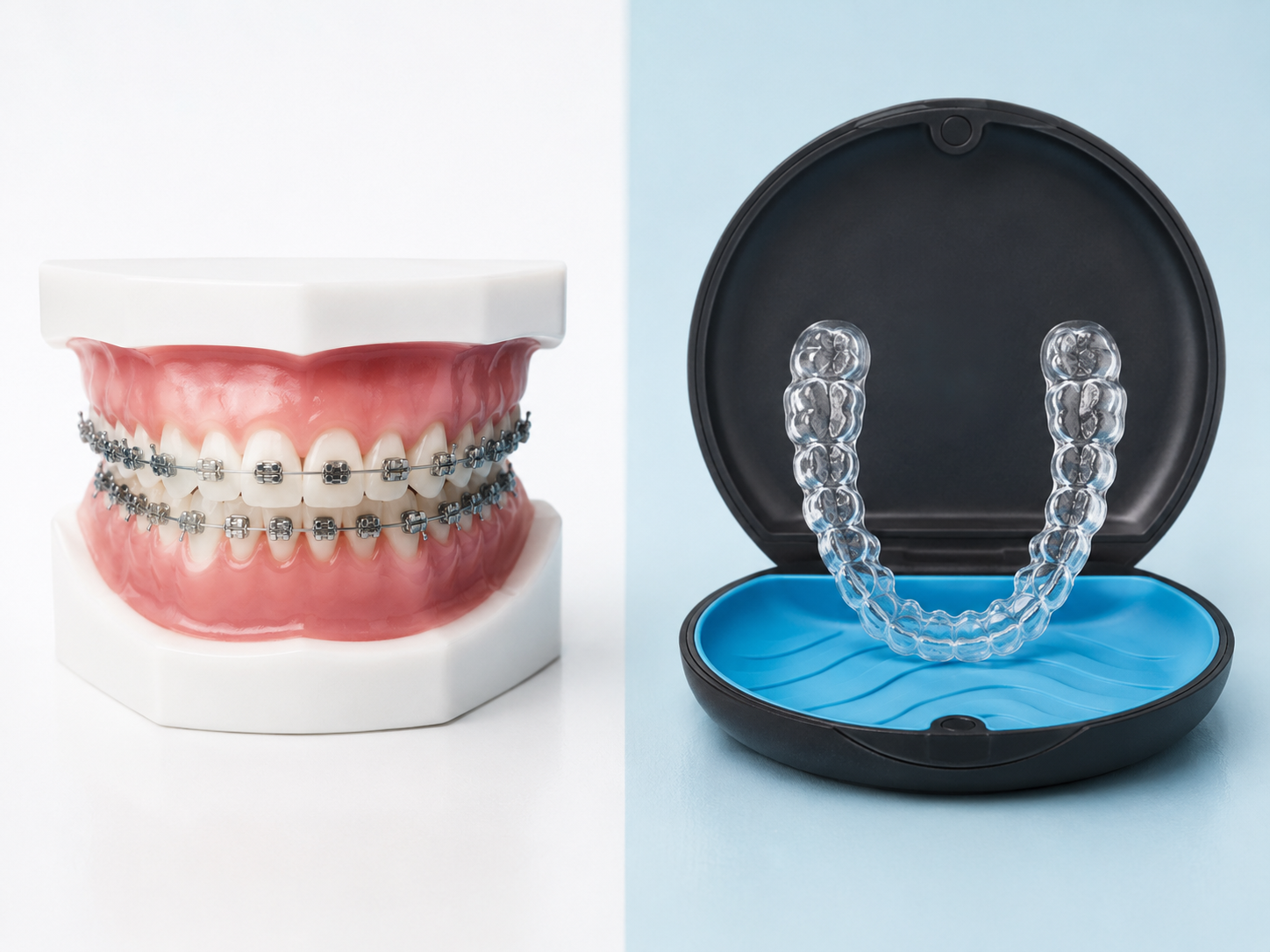
Choosing between braces and clear aligners in Denver comes down to case complexity, lifestyle, and budget: traditional braces handle complex bite corrections with fewer discipline requirements, while clear aligners suit mild to moderate cases and a less visible daily routine. Both come with transparent flat-fee pricing and zero-interest in-house financing, and both start with a free exam that determines which option actually fits a specific bite.
This is the question nearly every new patient asks first: braces or clear aligners? Both straighten teeth reliably, but they fit very different lifestyles and cases.
At Smilebliss Orthodontics, the honest answer depends less on personal preference and more on what your specific bite actually needs. This guide compares the two side by side so you can walk into a consultation already knowing what to ask.
A quick exam is the only way to know which option truly fits your case and your schedule. Contact us today to schedule a free consultation and get a clear recommendation.
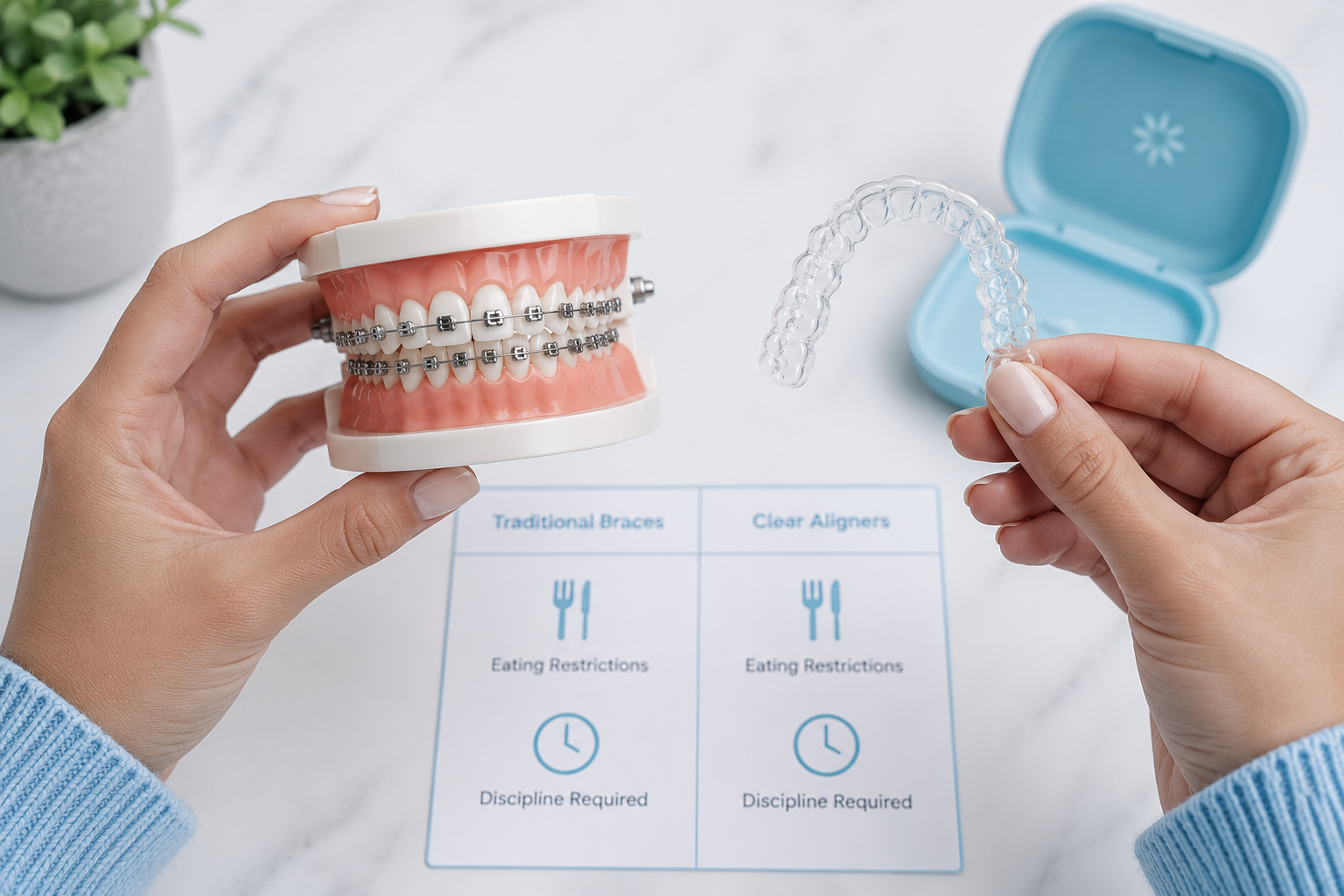 Both traditional braces and clear aligners move teeth into the same final position, just through different mechanisms. Braces use fixed brackets and wires that an orthodontist adjusts over time, while clear aligners use a series of removable trays you switch out yourself every one to two weeks.
The right choice depends on how complex your bite correction is, how much daily discipline you can realistically commit to, and how much visibility bothers you during treatment. Age plays a smaller role than most patients assume, since both teens and adults are routinely candidates for either option once case complexity is accounted for.
Cost also plays a role, though less than most patients expect going in. Both options run on transparent flat-fee pricing with zero-interest in-house financing, so the deciding factor tends to be case complexity rather than budget. Patients researching braces in Denver often assume traditional braces cost less across the board, but pricing for either option depends on how much correction the bite actually needs, not the brand name on the bracket or tray.
The table below lines up the two options across the factors patients ask about most. Most patients narrow their decision down to two or three rows in this table, usually visibility and discipline, before a free exam settles the rest based on the actual bite.
Traditional braces still handle the toughest bite corrections more predictably than any removable option, which is why an orthodontist will usually steer a complex case toward brackets and wires first. Our team at Smilebliss walks through the full traditional braces treatment plan at the free exam so patients understand exactly why a given case needs fixed appliances.
Brackets and wires give an orthodontist continuous, direct control over how each tooth rotates and tips, which matters most for cases needing significant correction rather than gradual adjustment. Because the wire applies steady force around the clock, an orthodontist can fine-tune pressure at each adjustment visit instead of waiting on a patient to switch trays correctly at home.
Once bonded, braces stay on the whole time, so there’s no risk of a treatment plan slipping because a tray got left in a bag or forgotten at home. The progress happens regardless. This matters most for teens and busy adults who want a predictable finish date without having to track wear time every day.
Severe crowding sometimes needs more force and control than removable trays can reliably apply, making traditional braces the more predictable option for these harder cases. Overlapping teeth, significant rotations, and bite corrections that involve multiple arches typically respond faster to the continuous pressure fixed appliances provide.
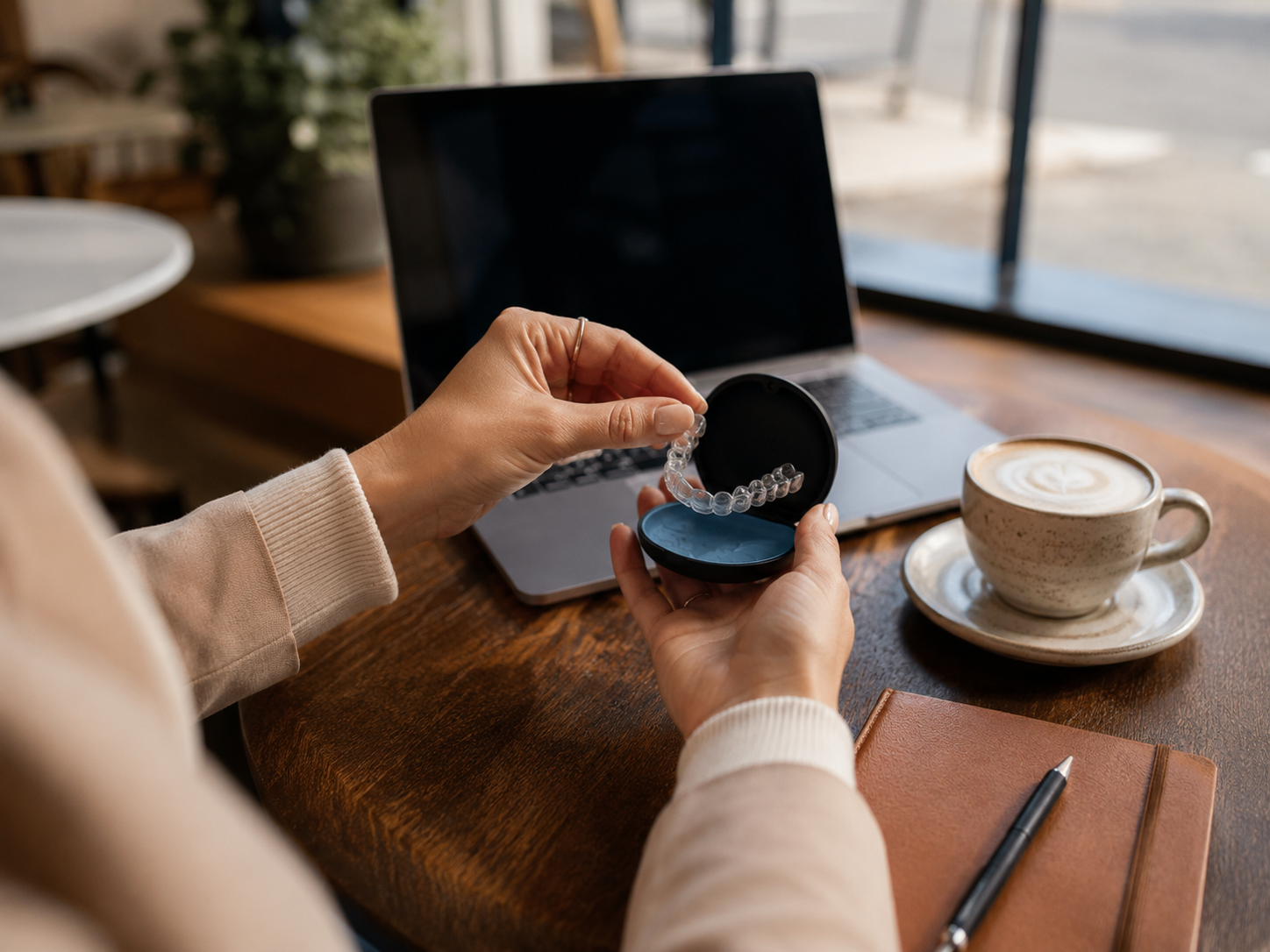 For patients with mild to moderate cases, lifestyle factors often matter as much as the clinical picture. Client-facing professionals, performers, and anyone self-conscious about visible metal often lean toward clear aligners specifically for that reason.
Removability also means no special cleaning routine around brackets and no food restrictions, which appeals to patients who travel often or eat out frequently for work or social reasons.
Adults returning to orthodontic treatment after years of putting it off tend to ask about clear aligners first, mainly because a clear tray fits into a professional setting without drawing attention. An orthodontist in Denver can confirm within one exam whether a case is mild enough for trays to work as well as braces would, since not every adult case qualifies even when lifestyle strongly favors the removable option.
Both options work well for the right case, and the only way to know which one fits yours is a real exam, not a guess based on preference alone. A free consultation settles the question in one visit.
At Smilebliss in Denver, Dr. Alejandro Arango and our team compare both options honestly based on what your bite actually needs. Call us today at (720) 706-8482 to schedule a free consultation at 1050 South Wadsworth Blvd., Suite H, Lakewood, CO 80226.
Neither option is universally better; each fits different cases. Clear aligners suit mild to moderate crowding and a less visible daily routine, while traditional braces handle complex bite corrections and severe crowding more reliably. The right answer depends on what a free exam reveals about your specific bite, not on personal preference alone.
Both options use transparent flat-fee pricing. Traditional braces are typically priced in a comparable range, though your exact cost for either option depends on case complexity and treatment length, and both figures are confirmed for you at your free exam before any commitment.
In some cases, yes, though switching mid-treatment can add time and cost depending on how far along your current plan is and how your teeth have already moved. A consultation can review your treatment records and confirm whether switching actually makes sense for your specific case.
Neither option is inherently faster; timeline depends far more on case complexity than on which treatment type you choose. Mild cases can move quickly with either braces or clear aligners, while complex bite corrections take longer regardless of the appliance, often the full 18 to 24 months.
Both cause mild soreness after an adjustment or a new tray, though many patients describe clear aligners’ pressure as slightly gentler day to day compared to a fresh wire adjustment. Either discomfort is temporary, usually easing within a couple of days, and over-the-counter pain relief typically covers it.
Yes, adults are common candidates for both traditional braces and clear aligners, and neither option is off-limits based on age alone. The right choice depends on case complexity, how much daily discipline fits an adult’s routine, and how much visibility matters in a professional or social setting.
Clear aligners work best for mild to moderate crowding and spacing, not every case that walks through the door. More complex bite corrections, significant rotations, and severe crowding typically respond better to the continuous control traditional braces provide, which a free exam can confirm either way.
No, traditional braces need adjustment visits every few weeks so an orthodontist can tighten wires and track progress in person. Clear aligner check-ins are usually spaced six to eight weeks apart since most of the movement happens tray by tray at home between office visits.
