
Posted on May 4, 2026
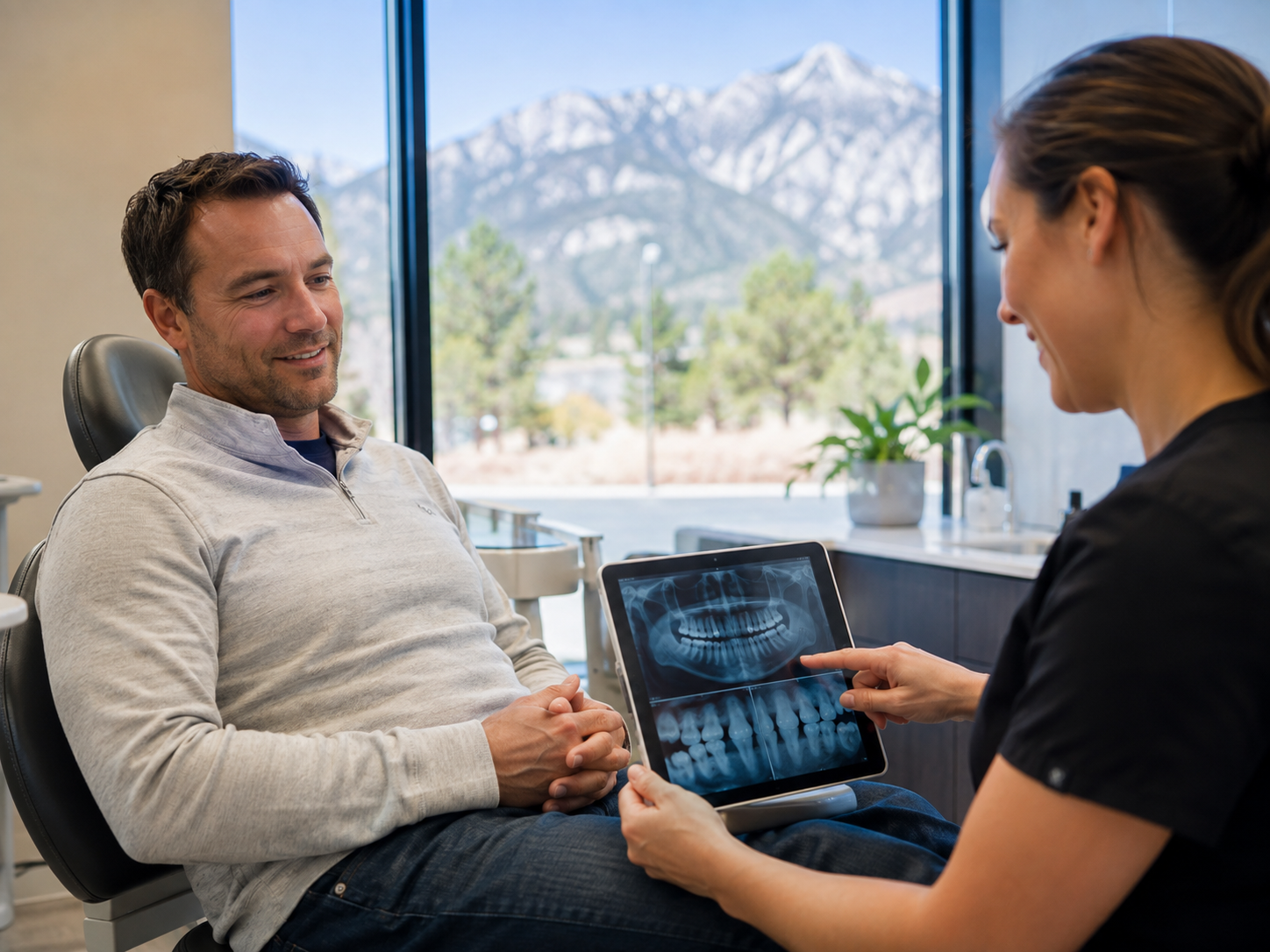
Adult braces in Denver work just as reliably as they do for teens, with no upper age limit on treatment and options ranging from traditional metal braces to clear aligners depending on the case. Adult cases sometimes move a little slower due to denser bone, but the biology of tooth movement doesn’t change with age. A free consultation determines the right option and a realistic timeline for an adult bite.
Adult patients often walk in assuming they waited too long. That assumption almost never holds up once the bite is actually examined.
At Smilebliss Orthodontics, straightening teeth as an adult works through the same biology as it does for a teenager, just at a slightly different pace. This guide covers what makes adult treatment different and what options are actually available.
The only way to know your specific timeline and options is a real exam, not a guess based on age. Contact us today to schedule a free consultation.
Adult orthodontic treatment has grown significantly more common over the past two decades, driven partly by more discreet options and partly by adults simply deciding their smile matters at whatever age they are. There is no upper age limit on orthodontic treatment.
Some adults want to correct something that shifted over the years, while others are finally addressing crowding from childhood that was never treated. Either way, the decision to start typically comes down to readiness, not a number on a birth certificate.
Workplace culture has shifted too. Video calls, client meetings, and networking events put smiles on display more often than a decade ago, and clear aligner options mean straightening no longer has to announce itself. Adults searching for adult braces in Denver today are often comparing discreet options first, then deciding on traditional brackets only if their case calls for it. Dental technology has also improved the experience itself: smaller brackets, more predictable aligner software, and shorter average check-in visits all make treatment easier to fit around a full-time job than it was in decades past.
A specific life event is often the trigger that finally moves someone from thinking about treatment to booking a consultation. A wedding on the calendar, a new job with more client-facing meetings, or simply reaching a point of financial stability can all be the push adults need. Others come in after noticing their own kids’ teeth shifting during orthodontic checkups and realizing their own smile has been on the back burner for years. None of these reasons need to be dramatic; wanting straighter teeth is reason enough on its own.
Adult bone has less cellular turnover than a teenager’s, so the same forces that move a tooth take a bit longer to produce the same result. The movement still happens reliably, just on a steadier timeline.
This is basic bone biology, not a limitation specific to any one patient. Teenage jaws are still growing and remodeling constantly, which speeds up how quickly a tooth responds to pressure. An adult jaw has finished growing, so the same orthodontic forces work through denser, more stable bone. The end result is identical tooth movement, achieved on a schedule that accounts for that difference rather than fighting it.
 Adults with a history of gum disease may need that addressed before or alongside treatment, since healthy gums and stable bone are what allow teeth to move safely. We check this at the very first visit.
Gum health matters more for adult cases simply because more adults have a history of it by the time they start treatment. Mild cases are often manageable alongside orthodontic work with closer hygiene monitoring, while active gum disease typically needs treatment first so the supporting bone is stable enough to move teeth safely. This is a standard part of the initial exam, not a reason treatment gets delayed indefinitely for most patients.
Adults typically have their full choice between traditional metal braces and clear aligners, since both work well on a fully developed jaw. The right pick depends on case complexity and personal preference.
Working with an experienced Denver orthodontist matters more for this decision than any general rule of thumb, since case complexity varies widely from one adult bite to the next. Straightforward crowding or spacing cases are often good clear aligner candidates, while more involved bite corrections may call for traditional brackets or a combination approach. A hands-on exam is what actually settles the question for a specific mouth.
Visibility is often the first concern adults raise, especially those in client-facing or public-facing roles. In practice, most coworkers and clients barely register metal brackets after the first week or two, and clear aligners remove the concern almost entirely for cases that qualify.
Modern brackets are also smaller and less noticeable than older versions many adults remember from their own childhood, which changes the day-to-day experience more than people expect going in.
Public speaking, sales calls, and interviews come up often in adult consultations, and the honest answer is that most people are far more focused on their own appearance than on someone else’s brackets. Clear aligners remove the visibility question almost entirely for cases that qualify, since trays are difficult to notice in normal conversation distance and can be removed for photos or presentations. For patients who do want traditional brackets, tooth-colored ceramic options are also available for a less visible middle ground between metal and clear aligners.
Adult treatment typically runs an 18 to 30 month range, slightly longer than the 18 to 24 months common in teen cases, though every bite is different. Traditional metal braces and clear aligners carry the same zero-interest financing, HSA, FSA, and insurance options regardless of age.
A consultation is the only way to get a real number for a specific case rather than a general range that may not reflect your actual bite.
Cost questions are usually the first thing adults ask about, right after timeline. Pricing for adult braces in Denver depends more on case complexity and treatment type than on age itself, and the full treatment bundle at Smilebliss covers the consultation, exam, digital X-rays, custom treatment plan, all brackets or aligners, routine adjustments, emergency repairs, and final retainers. Zero-interest in-house financing spreads the cost into manageable monthly payments, and most dental insurance plans that cover orthodontics apply the same benefit regardless of the patient’s age.
The right age to start is the age you decide your smile matters to you, and a real exam beats a guess every time. A free consultation gives you a clear, personal answer.
At Smilebliss in Denver, Dr. Alejandro Arango and our team walk adult patients through their options with no judgment about timing. Call us today at (720) 706-8482 to schedule a free consultation at 1050 South Wadsworth Blvd., Suite H, Lakewood, CO 80226.
No, there is no upper age limit on orthodontic treatment. Traditional metal braces and clear aligners both work reliably on a fully developed adult jaw, just as they do on a teen’s.
Adult treatment typically runs an 18 to 30 month range, slightly longer than the 18 to 24 months common in teen cases. Your exact timeline depends on your starting bite.
Most coworkers and clients barely notice modern, smaller brackets after the first week or two. Clear aligners remove the concern almost entirely for cases mild or moderate enough to qualify.
Existing gum disease is typically addressed before or alongside orthodontic treatment, since healthy gums and stable bone are what allow teeth to move safely. This gets checked at your first visit.
Yes, adults typically have their full choice between traditional metal braces and clear aligners. The right option depends on case complexity, not age.
Pricing is generally consistent regardless of age, with cost depending more on case complexity and treatment type. A consultation gives you an exact figure for your specific case.
Adult bone has less cellular turnover than a teenager’s, so the same forces that move teeth take slightly longer to produce results. The movement is just as reliable, only steadier.
An adult consultation includes a review of dental history, a visual exam, digital x-rays, and a walkthrough of treatment options and pricing, the same process used for any new patient.
