
Posted on December 11, 2025
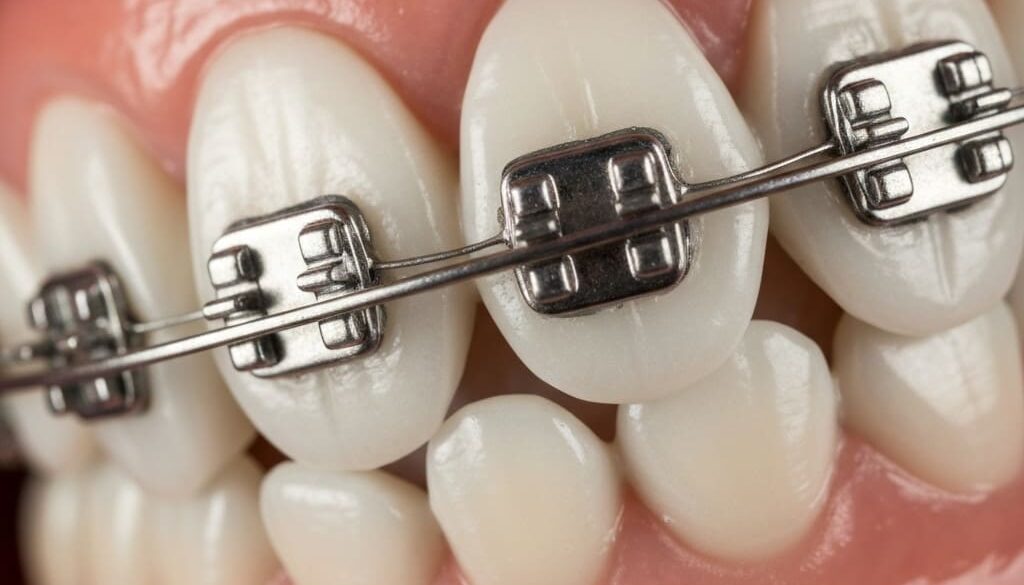
Keeping your smile clean and healthy while wearing metal braces takes extra care and consistency. Brackets and wires create small spaces that can trap food and plaque, which is why daily cleaning habits matter so much.
Using a soft-bristle toothbrush, interdental brushes, and fluoride mouthwash helps protect your teeth and keep your braces spotless. Regular checkups also play an important role in keeping everything in good shape throughout your treatment.
Caring for your braces shouldn’t feel complicated. At Smilebliss Orthodontics, we make the process easy and stress-free. From your first consultation to your final adjustment, our team is here to guide you every step of the way.
Book your visit today, and let’s keep that smile shining.
Metal braces do an impressive job of aligning your smile, but they also create more surfaces that need cleaning. The brackets and wires form small pockets where food particles can hide, and when left alone, these areas can lead to plaque buildup. That’s why your brushing and flossing routine must be more thorough while you’re wearing braces.
Brushing without braces usually takes around two to three minutes. With braces, you’ll need closer to five to ten minutes to reach every area properly. It may sound like a big difference, but those few extra minutes make a huge impact on your results and your oral health. The effort keeps your smile clean and helps your treatment stay on track.
Having a simple, consistent routine is the easiest way to protect your teeth and gums while wearing metal braces. Daily cleaning keeps your brackets clear of debris and prevents plaque from hardening. Here’s a practical guide to follow every day.
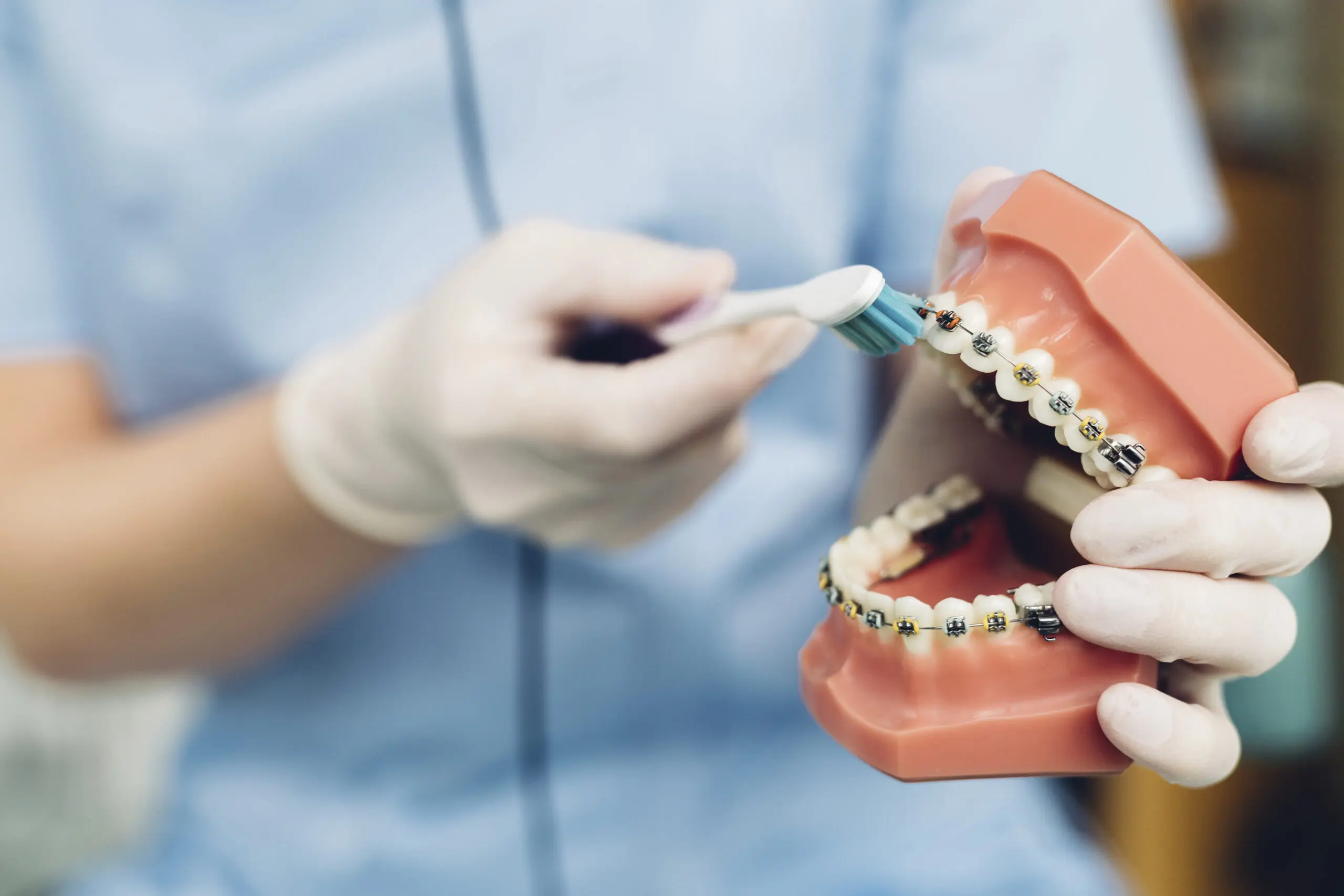 Choose a soft-bristle toothbrush or an orthodontic brush. Hold it at a 45-degree angle toward your gumline and clean each tooth carefully.
Move in small circular motions, making sure to clean above, below, and around every bracket and wire. Spend at least two minutes brushing, focusing on both the front and back surfaces of your teeth.
If you find some areas hard to reach, an electric toothbrush can be a great helper. Its steady movement helps remove buildup more effectively without applying extra pressure.
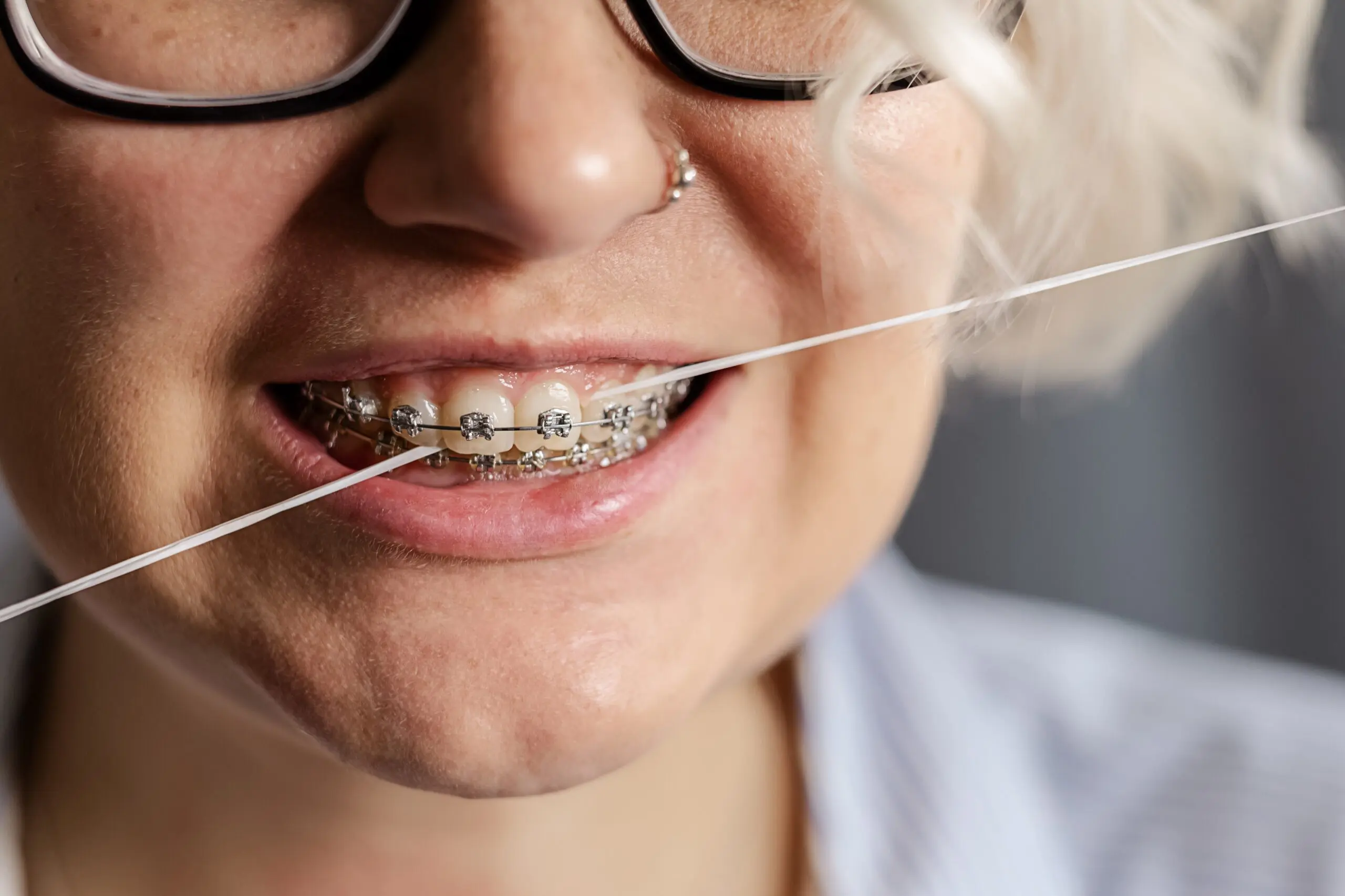
Flossing with braces takes more time, but it makes a huge difference in keeping your gums healthy. Use orthodontic floss or a threader to slide the floss between your teeth and under the wire. Move it gently along the sides of each tooth to remove hidden plaque.
Avoid snapping the floss against your gums. Use steady, gentle movements instead. Doing this once a day helps prevent irritation and keeps your gums firm and pink.
An interdental brush is a small tool designed to reach spaces that a regular toothbrush can’t. It’s perfect for cleaning around brackets and under wires. Insert it gently between the braces and move it back and forth to remove trapped food or buildup.
You can use it after every meal or once a day as part of your nightly routine. It’s quick, convenient, and keeps your braces spotless.
 A water flosser uses a steady stream of water to wash away debris between your teeth and braces.
It’s a great way to clean without discomfort, especially if traditional flossing feels awkward. Aim the stream along your gumline and between your brackets for best results.
While it doesn’t replace flossing, it works well alongside it, especially for people who eat frequently or have sensitive gums.
After brushing and flossing, use an antibacterial or fluoride mouthwash. Swish for about 30 seconds to help reduce bacteria and strengthen your enamel. Avoid eating or drinking anything for half an hour afterward to let the rinse do its job.
This final step leaves your mouth feeling fresh and clean, ready to start the day or wind down for bed.
Your food choices play a big part in caring for your braces. Some foods can damage brackets or make cleaning more difficult, so it helps to know what to avoid and what to enjoy instead.
 Hard foods like apples, carrots, and nuts. Cut them into smaller pieces instead of biting directly.
After every meal, rinse your mouth with water, then brush and floss to remove any remaining food particles and keep your braces clean.
Caring for your braces might take a little extra time, but it becomes second nature once it’s part of your daily routine. Each step you take, such as brushing carefully, flossing daily, and choosing your food wisely, protects the progress you’re making and keeps your smile bright and healthy.
Staying consistent also means fewer adjustments, fewer setbacks, and better results when your treatment ends. It’s all about keeping your mouth clean, your braces secure, and your smile strong.
Keeping your braces clean is not only about appearance but also about comfort, steady progress, and confidence. By following these steps, you can prevent plaque buildup, keep your gums healthy, and protect your investment in your smile.
Ready to make braces care simple and stress-free? Contact us at Smilebliss Orthodontics today. Our team is here to help you stay on track and enjoy a smoother, more comfortable journey to a confident smile. Let’s make your smile shine brighter every day.
Medical Disclaimer
The information provided in this article is for educational purposes only and should not be taken as medical advice. Always consult a professional regarding your specific condition, treatment, or oral care needs.
