
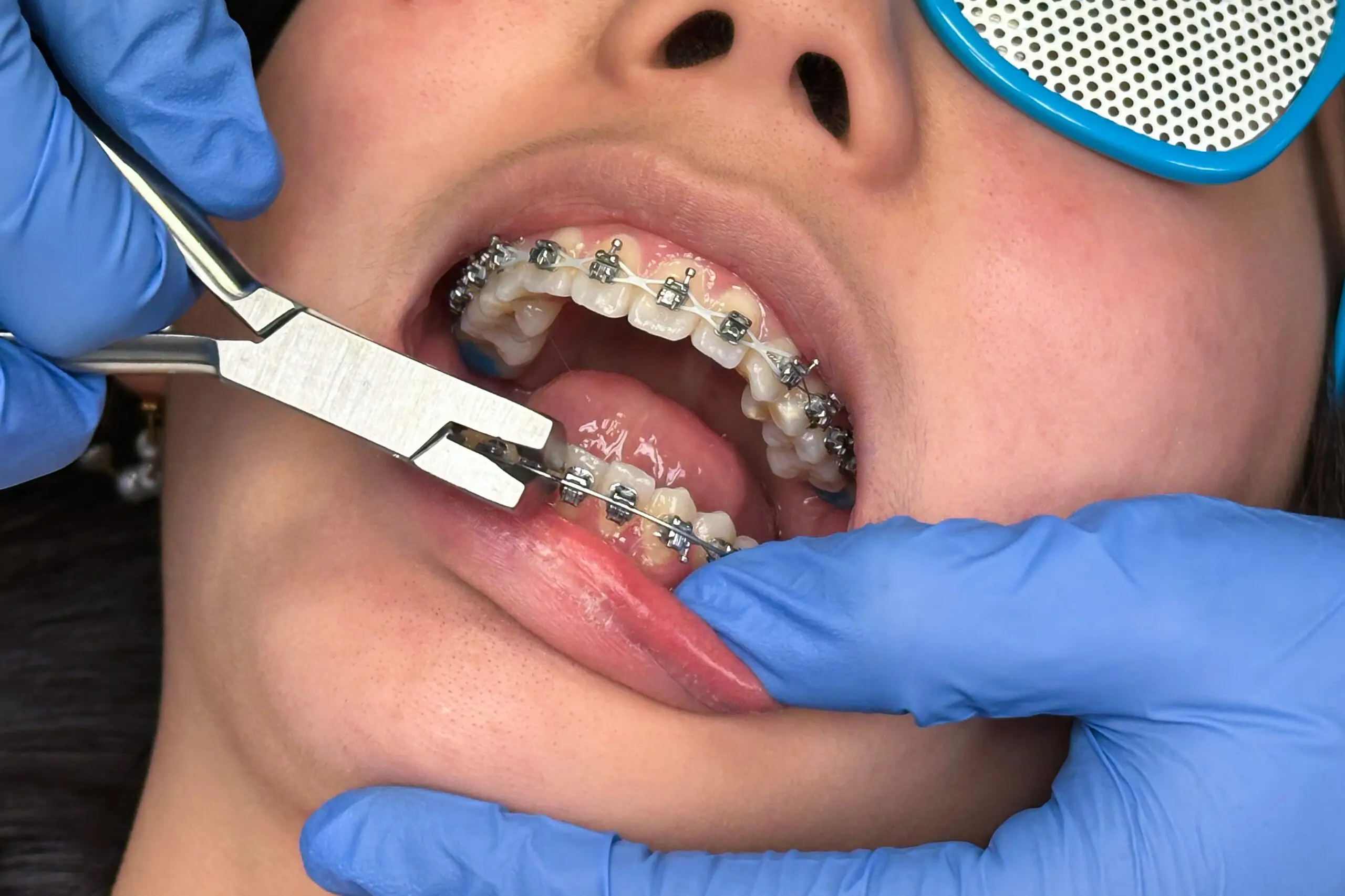
We all want straight teeth and a confident smile, but understanding orthodontic treatment options can feel overwhelming. Traditional metal braces remain the most common solution, currently helping approximately 4 million Americans achieve healthier, straighter smiles.
Despite the rise of clear aligner alternatives, metal braces still account for 50-60% of all orthodontic treatments—and there’s good reason for that dominance.
So what exactly are traditional metal braces, and how do they actually work to move teeth? Below is a comprehensive look at the definition, mechanism, and practical considerations that make metal braces the gold standard for orthodontic treatment, backed by over 100 years of proven results.
If you’re exploring your options, a quick consultation with Smilebliss can help you understand whether traditional braces are the right fit for your smile goals.
Traditional metal braces are orthodontic devices designed to straighten teeth and correct bite problems through continuous, gentle pressure over time.
Unlike removable aligners or cosmetic solutions, metal braces are fixed appliances that work 24/7 to guide teeth into their ideal positions. These systems combine engineering precision with biological principles, harnessing your body’s natural ability to remodel bone tissue for predictable, controlled tooth movement.
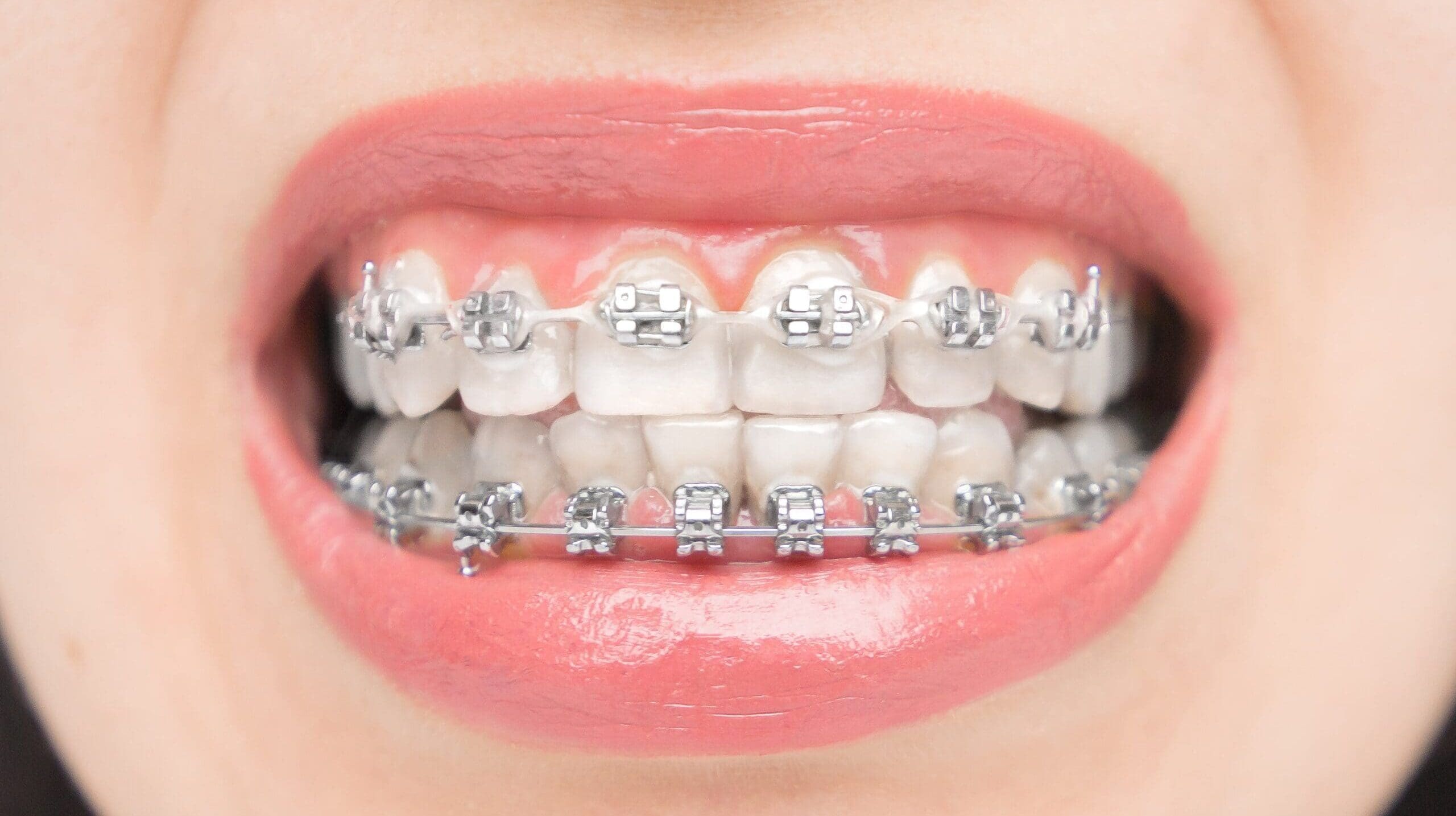
Understanding how braces work starts with knowing the parts involved:
Today’s braces use medical-grade stainless steel brackets that provide consistent, gentle forces. Heat-activated wires activate with body temperature, delivering more comfortable pressure than older technologies.
Metal braces continue to dominate orthodontic treatment due to their unmatched versatility, proven track record, and superior effectiveness for complex cases.
Metal braces can treat virtually any malocclusion (bite problem) or alignment issue:
Alignment Issues:
Bite Problems (Malocclusions):
Unlike clear aligners that work best for simple to moderate cases, metal braces reliably handle the most severe malocclusions, including extraction cases, significant vertical tooth movements, and complex rotations.
The mechanics of tooth movement combine engineering and biology. Understanding this helps patients appreciate why treatment takes months and why following orthodontic instructions matters.
Your teeth aren’t glued directly into your jawbone. Instead, they’re held in place by a soft, stretchy tissue called the periodontal ligament (PDL). Think of it as a tiny shock absorber that keeps each tooth secure while still allowing gentle movement.
When braces apply steady pressure, here’s what actually happens:
The archwire connected to your brackets puts a light, steady push on a tooth. It’s firm enough to encourage movement but gentle enough to avoid pain.
One side of the ligament gets slightly squeezed, and the opposite side gets slightly stretched. This change signals the body that the tooth needs to shift.
On the side where the ligament is compressed, the body starts to break down a tiny amount of bone. This creates space for the tooth to move.
On the stretched side, the body creates new bone to fill in behind the tooth. This keeps the tooth stable as it shifts.
Because bone is being removed on one side and rebuilt on the other, the tooth can slide through the jaw, usually about 1 millimeter per month. Going faster isn’t safe, and going slower isn’t effective.
Why This Matters
This natural “bone remodeling” is why orthodontic treatment takes time and can’t be rushed. It also explains why your teeth can shift after treatment: the new bone needs months to fully harden and stabilize.
That’s why wearing your retainer is so important—it keeps everything in place while your bone finishes strengthening around the teeth.
The archwire is what actually moves your teeth. Treatment usually starts with a thin, flexible wire that can easily thread through crowded or rotated teeth. These wires have “shape memory,” meaning they naturally want to return to a perfect arch shape. As they try to return to that shape, they gently guide your teeth into better alignment.
As your teeth straighten, your orthodontic team switches to thicker, stronger wires that give more control and help fine-tune the final positions.
Most patients come in every 4–8 weeks so the orthodontic team can check progress, swap in the next wire, and adjust the direction of force as needed.
| Phase | Duration | Key Activities | What to Expect |
|---|---|---|---|
| Initial Alignment | Months 1-6 | Bracket bonding (1-2 hours); Initial wire placement; Appointments every 4-8 weeks | First week soreness (manage with soft foods, ibuprofen, orthodontic wax); Dramatic visible changes as crowded/rotated teeth begin aligning |
| Active Treatment | Months 6-18 | Closing extraction spaces; Bite correction using elastics; Progressive wire changes to more rigid materials | Most patient compliance required if elastics prescribed (20-22 hours daily); Inconsistent wear can extend treatment by months |
| Finishing | Months 18-24+ | Fine-tuning individual tooth positions; Ensuring proper bite contacts; Final settling | Small adjustments to perfect three-dimensional positioning; Average total treatment time: 24 months (range: 12-18 months simple cases, 24-36+ months complex cases) |
| Retention | Post-Treatment | Full-time retainer wear 6-12 months; Transition to night-time wear; Many orthodontists recommend indefinite night-time retention | Bone needs months to stabilize; Without retention, teeth shift back toward original positions |
Understanding the practical realities of living with braces helps you prepare for treatment and maximize results.

The bonding appointment is straightforward, taking 1-2 hours. There’s no pain during bonding, though your jaw may feel tired. The first 3-7 days involve the biggest adjustment; teeth feel sore as bone remodeling begins. This soreness peaks around day 2-3, then gradually diminishes.
Manage this period with:
By week two, most patients have adapted. Each subsequent adjustment causes mild soreness for a day or two.
Excellent oral hygiene is non-negotiable with braces. Poor hygiene leads to cavities, gum disease, and white spot lesions (permanent decalcification marks). Patient compliance with oral hygiene represents approximately 85% of treatment success.
How to Brush:
Flossing:
Why it Matters
After braces are removed, you want straight, healthy teeth with beautiful enamel. White spot lesions are visible marks where brackets were attached. While severe lesions can be permanent, early and mild spots are often reversible.
Foods to Avoid:
How to Adapt:
Why Restrictions Matter
Each broken bracket requires an emergency appointment and delays treatment. A single bracket failure can add 2-4 weeks to total treatment time. Several failures can make treatment last longer by months.
When metal braces are the better choice:
When clear aligners may be preferred:
Traditional metal braces remain one of the most reliable, effective options for achieving a confident smile. If you’re ready to start your journey, schedule a consultation with Smilebliss today.
Traditional metal braces are still the most trusted option in orthodontics because they consistently deliver the results patients want. With high success rates, they can handle almost any orthodontic issue.
Most people wear braces for about 24 months, and that commitment to appointments, good oral hygiene, and a few diet adjustments pays off with long-term benefits. You’re investing in better oral health, improved function, and a confident smile that lasts.
If you’re thinking about braces, the best next step is to book a consultation with Smilebliss.
