
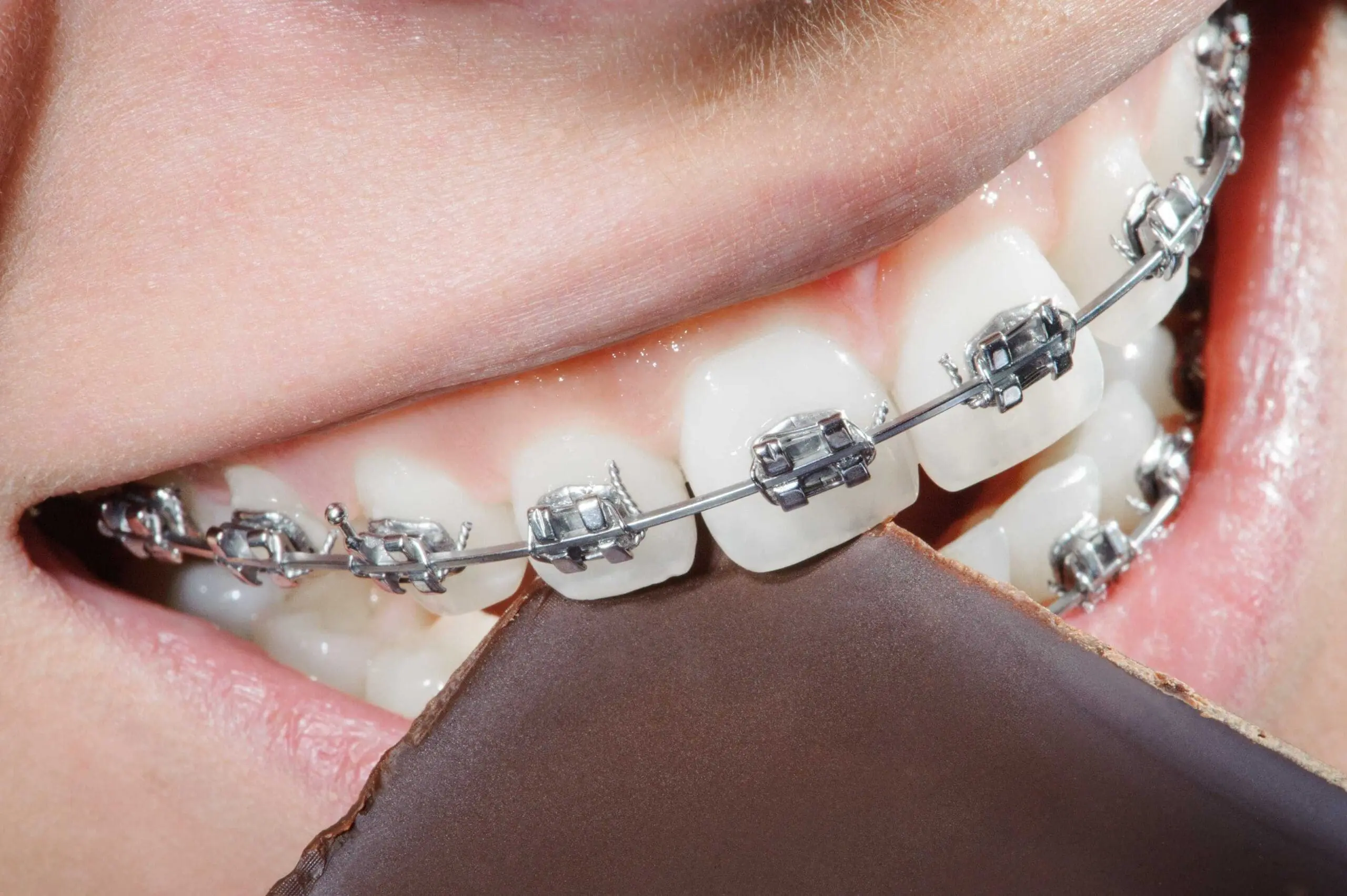
Eating with metal braces is easier than you think. Stick to soft foods, cut hard items into small pieces, and avoid sticky or crunchy snacks that can damage brackets and wires. With a few simple adjustments, you can enjoy delicious meals throughout your entire orthodontic treatment without any problems.
So you just got metal braces… Congrats! You’re officially on your way to a smile that’s total bliss. But now you’re probably wondering, what can I actually eat with these things?
Good news. Eating with metal braces doesn’t mean surviving on mashed potatoes and smoothies for the next year or two. You just need to know which foods are your friends, which ones to avoid, and a few easy tricks to make mealtime stress-free.
At Smilebliss, we want your braces journey to be as smooth as possible. That’s why we created this complete guide to eating with traditional metal braces. Whether you’re a teen navigating the school cafeteria, a parent packing lunches, or an adult figuring out dinner plans, we’ve got you covered.
Let’s dig in.
Food choices directly impact your braces and treatment timeline. Hard, sticky, and crunchy foods can break brackets, bend wires, and loosen bands. When this happens, you need extra appointments to fix the damage, which can extend your treatment time.
Metal braces work by applying gentle, consistent pressure to move your teeth into their ideal positions. The brackets are bonded to your teeth, and the archwire connects them. This system is strong but not indestructible. Biting into the wrong food can pop a bracket off or cause a wire to snap.
Beyond damage, certain foods can get trapped around brackets and wires. This makes cleaning harder and increases the risk of cavities and gum problems. Nobody wants to finish treatment with a straight smile and a bunch of fillings.
The most important thing is that the right foods will protect your braces, keep your treatment on track, and help you keep your mouth healthy while you’re doing it.
Certain foods are off-limits during your braces treatment. These foods can break brackets, bend wires, get stuck in your braces, or cause other damage that leads to extra orthodontist visits.
Here’s what to skip:
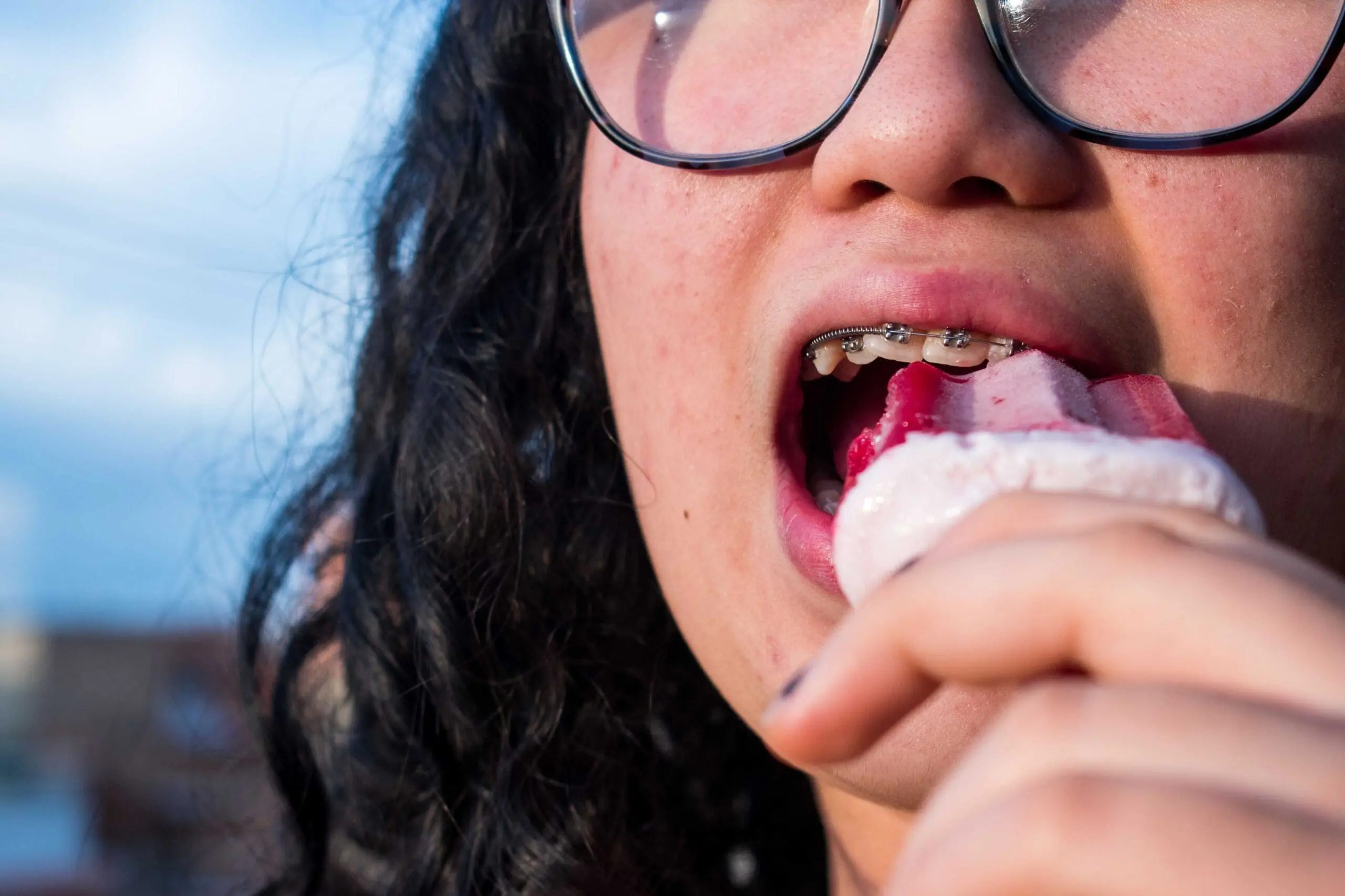 Hard foods put too much pressure on brackets and can snap them right off your teeth.
Avoid these:
Sticky foods cling to brackets and wires. They’re difficult to clean off and can pull brackets loose.
Avoid these:
Crunchy foods can crack brackets or cause wires to shift out of place.
Avoid these:
Chewy foods require repetitive biting and pulling that can loosen brackets over time.
Avoid these:
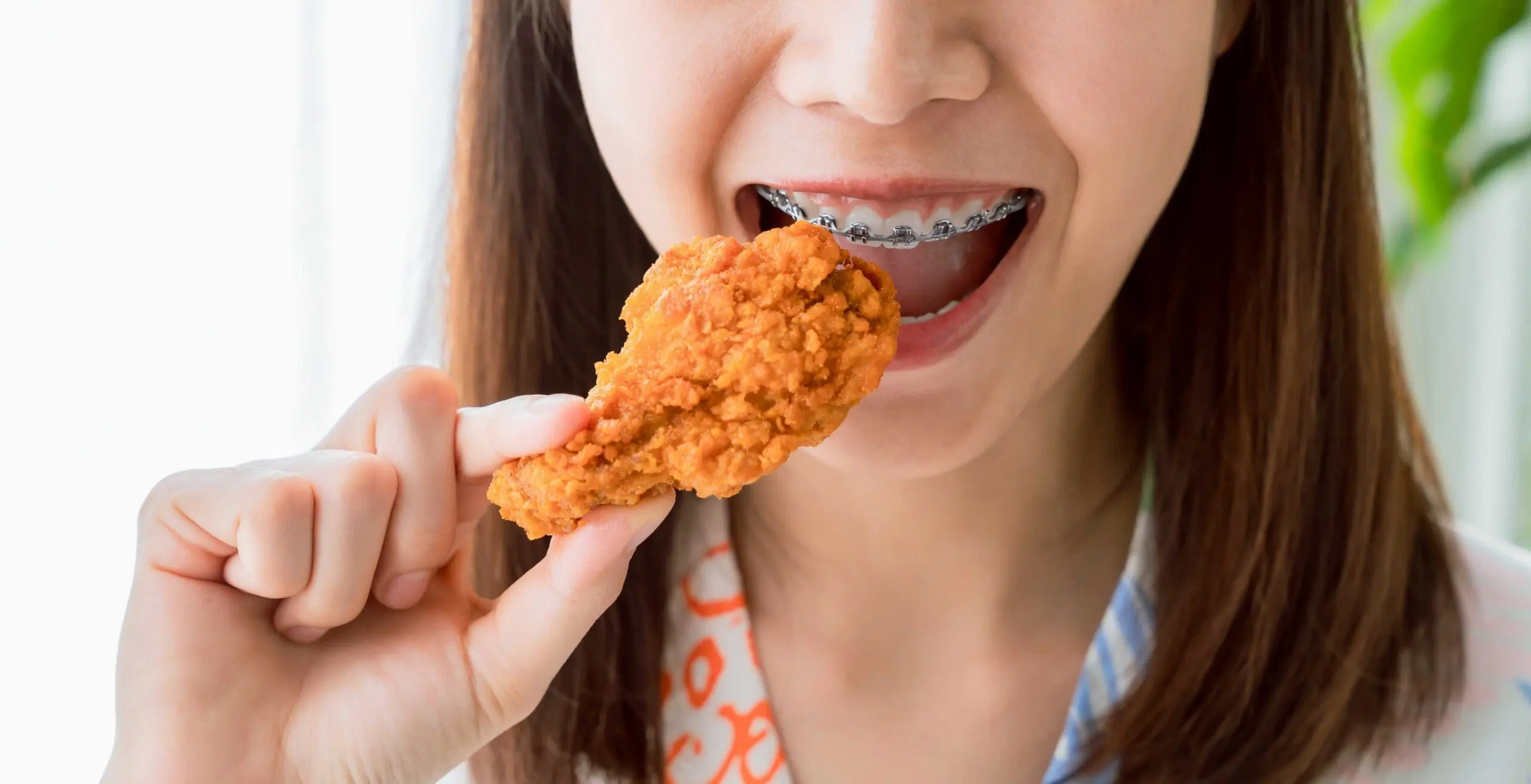 Biting directly into food puts pressure on your front brackets, which are most likely to pop off.
Avoid biting into:
Plenty of delicious foods are totally safe for metal braces. The key is choosing soft foods, cutting items into small pieces, and chewing with your back teeth.
Soft fruits are packed with nutrients and gentle on your braces.
Enjoy these:
Cooking vegetables softens them, making them safe and easy to chew.
Enjoy these:
Protein is essential for your overall health. Stick with tender options.
Enjoy these:
Soft grains and starches are filling and braces-friendly.
Enjoy these:
Dairy products are great for building strong teeth and are naturally soft.
Enjoy these:
Yes, you can still have treats! Just choose soft options.
Enjoy these:
Knowing what to eat is only half the battle; how you eat matters just as much. These techniques protect your braces and make eating more comfortable.
Large bites put pressure on your brackets. Cut everything into small, bite-sized pieces. Use a knife and fork more than you used to. Your braces will thank you.
Your back teeth do the heavy lifting when it comes to chewing. They’re stronger and have more surface area. Avoid biting with your front teeth, especially into hard or chewy foods. Place food toward the back of your mouth and chew slowly.
Smaller bites mean less pressure on your braces with each chew. Slow down and enjoy your food. Rushing through meals increases the chance of accidentally biting something the wrong way.
Very hot or very cold foods won’t damage your braces, but they can cause temporary discomfort, especially if your teeth are sore after an adjustment. Let hot foods cool down a bit, and take small bites of cold treats like ice cream.
Food gets stuck in braces easily. Carry a small toothbrush or rinse with water after meals to clear debris. This keeps your teeth clean and prevents staining around your brackets.
The first few days after getting metal braces or after each adjustment, your teeth may feel sore and sensitive. This is completely normal. Your mouth is adjusting to the new pressure on your teeth.
During this time, stick to extra-soft foods:
Within a few days, the soreness fades, and you can return to your normal braces-friendly diet. If discomfort lasts more than a week, let your orthodontist know.
Missing your favorite foods? Try these easy swaps:
| Instead of… | Try… |
|---|---|
| Whole apples | Apple slices or applesauce |
| Corn on the cob | Cut corn kernels |
| Hard pretzels | Soft pretzels |
| Popcorn | Puffed rice snacks or cheese puffs |
| Hard candy | Soft chocolate or peanut butter cups |
| Caramel | Chocolate without caramel filling |
| Chewy bagels | Soft sandwich bread or tortillas |
| Raw carrots | Steamed carrots or carrot sticks cut thin |
| Crunchy tacos | Soft tacos or burrito bowls |
| Nuts | Nut butters (peanut butter, almond butter) |
| Gummy candy | Jell-O or pudding |
| Tough steak | Tender shredded beef or ground beef |
Snacking doesn’t have to stop when you get braces.
Here are quick, easy, and safe snack ideas:
Keep braces-friendly snacks on hand at home, school, and work. When you have good options available, you’re less tempted to reach for something that could damage your braces.
Mistakes happen. If you eat something hard or sticky and feel a bracket come loose or a wire shift, don’t panic.
Here’s what to do:
Avoid eating more hard or sticky foods while waiting for your appointment; you don’t want to make things worse.
Helping your teen navigate braces means keeping the right foods at home and packing safe lunches.
Helpful tips:
Being prepared makes the braces experience easier for the whole family.
Getting metal braces is a big step toward the smile you’ve always wanted, and eating well during treatment helps you get there faster. At Smilebliss, we make orthodontic care affordable, comfortable, and dare we say… blissful.
Our traditional metal braces cost up to 60% less than other offices, with flexible payment plans that fit your budget. Plus, our team is here to support you every step of the way—from your first consultation to the day your braces come off.
Ready to start your smile journey? Book a free consultation at Smilebliss today.
Yes, spicy food is safe for metal braces. Spices and heat won’t damage brackets or wires. However, if you have mouth sores or irritation from your braces, spicy foods may cause temporary discomfort. Wait until any sores heal before eating very spicy meals.
The metal brackets and wires themselves don’t stain, but the clear or colored elastic ties can. Foods and drinks like curry, tomato sauce, coffee, tea, and berries may discolor your elastics between appointments. If staining bothers you, choose darker elastic colors or avoid these foods right before events where you want your braces to look fresh.
You can, but limit them. Soda is high in sugar and acid, which increases cavity risk around brackets. Coffee and tea can stain your elastics and teeth. If you drink them, use a straw to minimize contact with your teeth and rinse with water afterward. Water is always the best choice.
It’s best to eat at least an hour before your appointment and brush your teeth afterward. Arriving with food stuck in your braces makes it harder for your orthodontist to work. If you can’t brush, rinse thoroughly with water before your visit.
Some people lose a few pounds initially because eating takes more effort and certain favorite foods are off-limits. However, this typically balances out once you adjust to your new diet. Focus on eating nutritious, braces-friendly foods rather than restricting calories. Your body needs fuel to stay healthy during treatment.
Eating out is totally doable with braces. Choose soft menu items like pasta, fish, mashed potatoes, or soft tacos. Ask for sauces on the side if they contain hard bits. Cut food into small pieces and chew carefully. Bring a small mirror or use your phone camera to check your teeth before leaving.
Yes, but stick to very soft foods or liquids on day one. Your teeth will feel sore and sensitive as they adjust to the pressure. Smoothies, yogurt, soup, and mashed potatoes are ideal. Avoid anything that requires real chewing until the initial tenderness subsides, usually within 3-5 days.
Acidic foods like citrus fruits, tomatoes, and vinegar-based dressings won’t damage the metal brackets or wires directly. However, acid weakens tooth enamel over time, making teeth more vulnerable to cavities. Since braces already make cleaning harder, limit acidic foods and rinse with water after eating them.
You can enjoy vacations and holidays; just make sure to plan ahead. Pack braces-friendly snacks for travel. At holiday meals, fill your plate with safe options and cut food into small pieces. Skip the hard candy canes and sticky caramels, but enjoy soft desserts like cake and pie. A little preparation means you won’t miss out.
Meals take longer with braces, especially at first. Cutting food into small pieces, chewing carefully, and cleaning your teeth afterward adds time. Most people adjust within a few weeks and find a routine. Give yourself an extra 10-15 minutes for meals until eating with braces feels natural.
